M103
4-8 inch Telescope • Open Clusters Rich
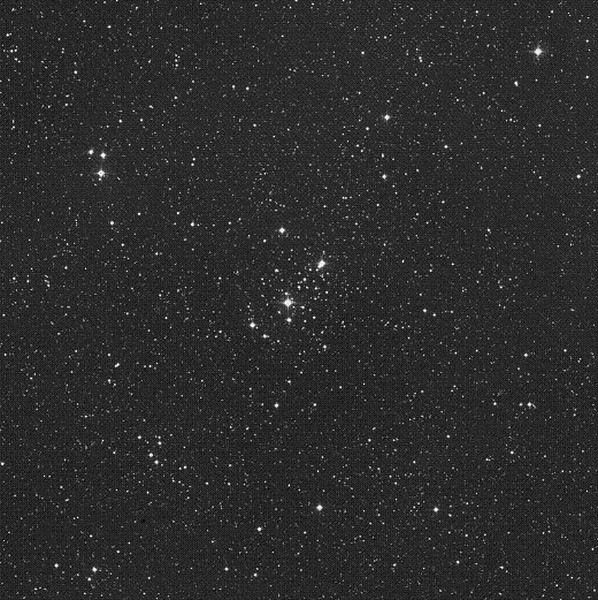
Image: Palomar Observatory courtesy of Caltech
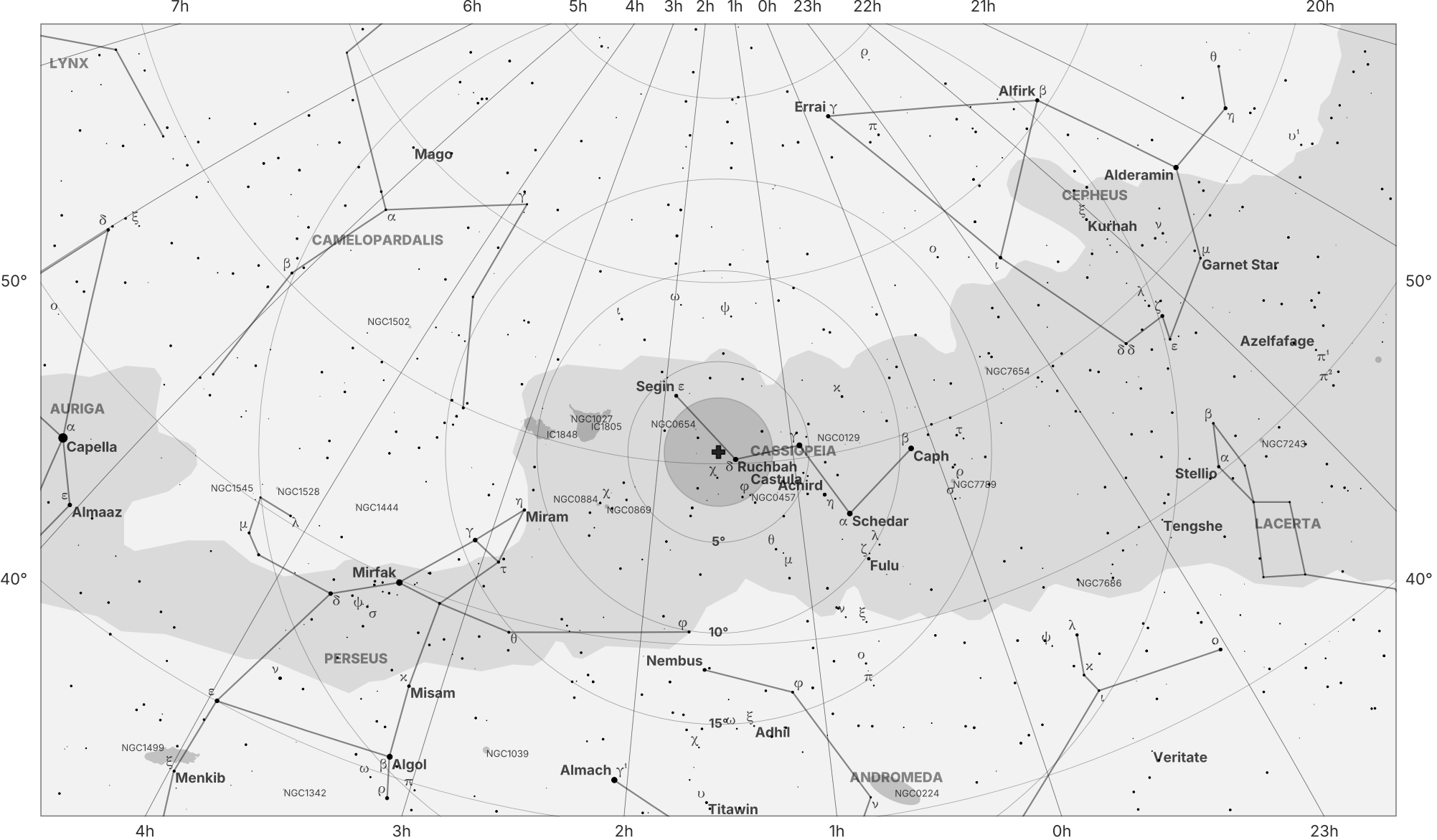
Finder map for M103
Discovered by Pierre Méchain in 1781, NGC 581 was not included in Messier’s published catalog but was later designated Messier 103 based on his correspondence, making it one of the later-recognized Messier objects. Best observed when high in the sky. It is circumpolar for observers at higher northern latitudes, but rises and sets for many mid-northern locations. The main challenge is resolving the fainter cluster members against the dense Cassiopeia star field and distinguishing true members from foreground stars, which can make the cluster’s boundaries difficult to define.
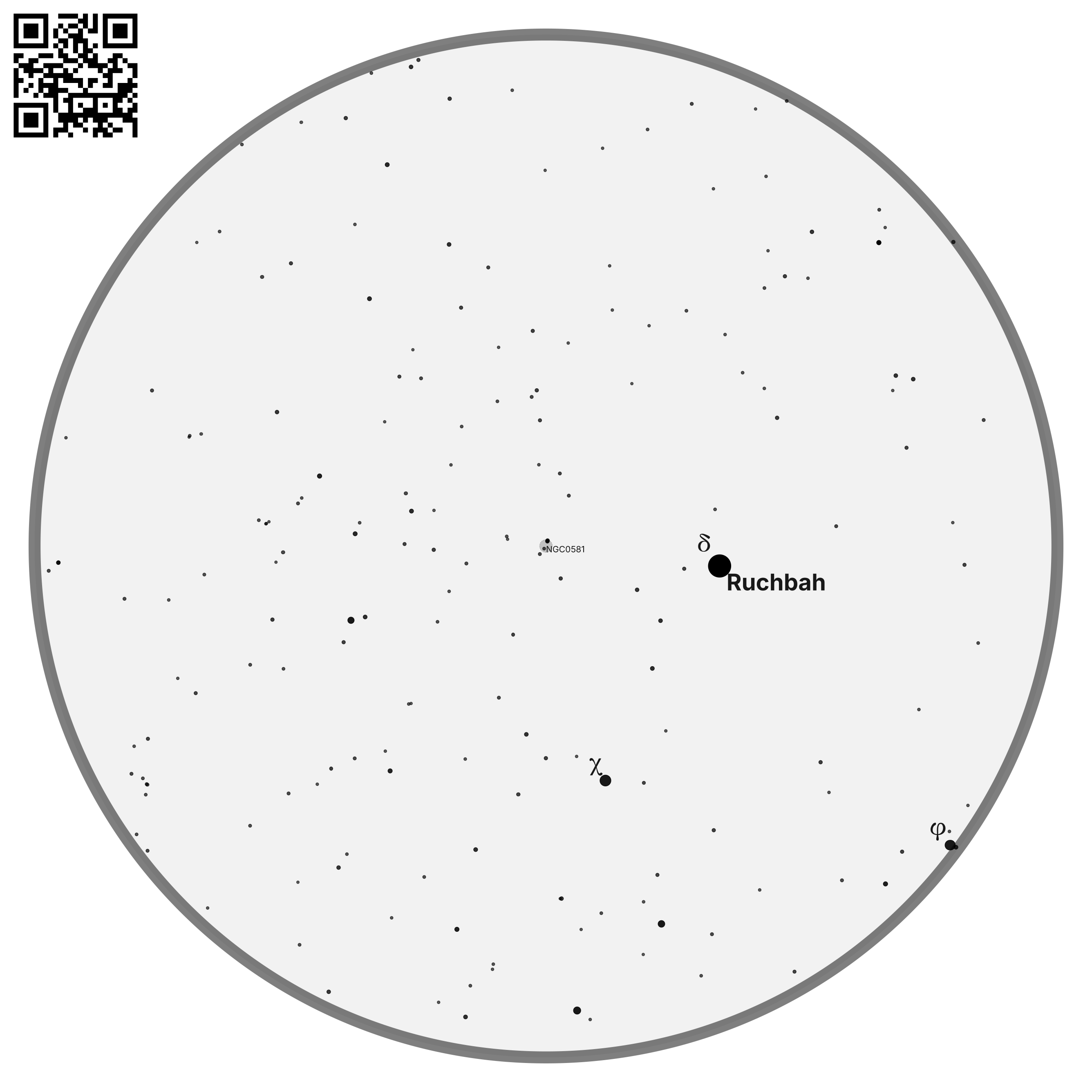
Finder scope & binocular view of M103
| Property | Value |
|---|---|
| Common names | Messier 103 |
| Catalog names | M 103, NGC 581, Cr 14, Mel 8 |
| Type | Stellar Cluster |
| Subtype | Open Cluster |
| Coordinates | 1h 33m 21.10s, +60° 39’ 13.00” |
| Season | September - November |
| Best month | Mid-October |
| Beginner friendly | Marginal |
| Visual reward | Moderate |
| Filters required | None |
| LP tolerance | High |
| Minimum equipment | Small telescope |
| Optimal equipment | Medium telescope |
| Magnitude | 7.4 |
| Size | 6.0 arcminutes x 6.0 arcminutes |
| Constellation | Cassiopeia |
Observation Notes
Naked Eye
Not visible.
Binoculars
Appears as a very small, faint, unresolved cluster with a slight concentration of light; individual stars are not clearly separated, and the object can be easy to overlook without careful sweeping.
Small Telescope
In 4–6 inch apertures, resolves into a modest group of stars forming a distinctive fan or arrowhead shape. The bright foreground double star Struve 131, not physically associated with the cluster, is easily seen near the cluster’s edge.
Medium Telescope
With 8–12 inches, several dozen stars are resolved, and the loose, irregular structure becomes clear. Subtle color contrast may be noticed between the hotter blue cluster members and a reddish foreground star.
Large Telescope
In apertures of roughly 14 inches and larger, many dozens of stars are visible across a wide area, emphasizing the cluster’s sparse, loosely bound nature with little central concentration.