NGC 3532
Binoculars • Open Clusters
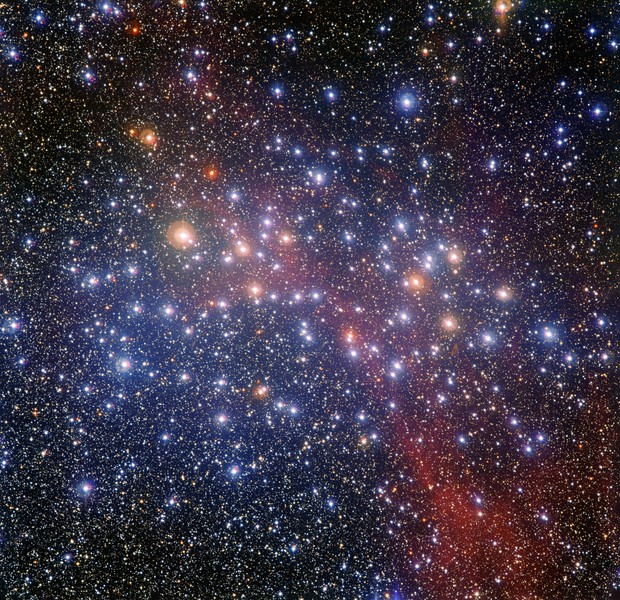
Image: ESO/G. Beccari
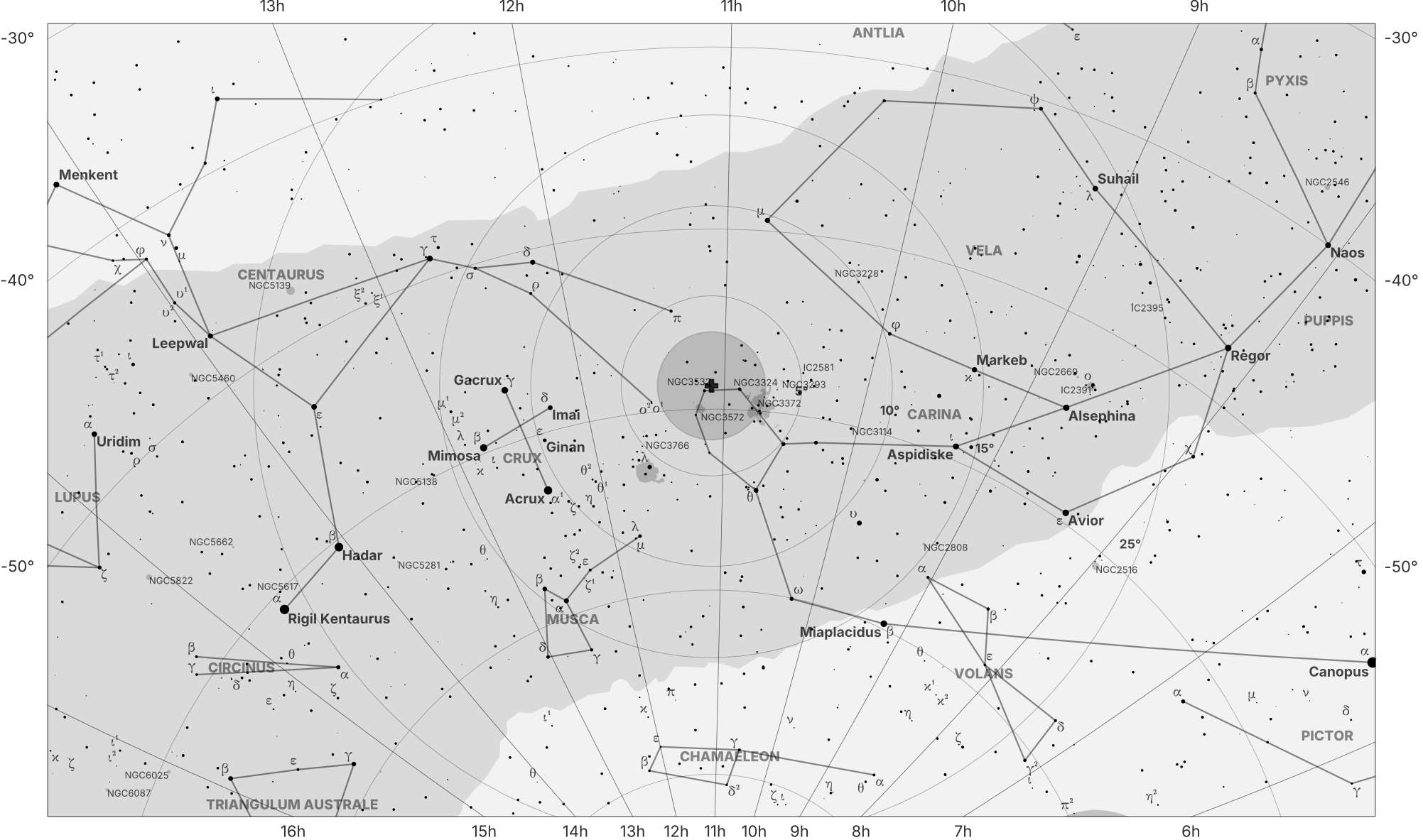
Finder map for NGC 3532
Nicknamed the ‘Wishing Well Cluster’ as the star field resembles shimmering silver coins at the bottom of a well. The ‘Football Cluster’ name comes from its elongated, oval shape seen through telescopes. High in the sky for southern hemisphere observers. Very low for observers near 30° N latitude and not visible north of about 31° N. Appreciating the sheer richness of stars across the cluster while framing its full extent in a single low-power field of view. In telescopes, balancing magnification to resolve the star field without losing the cluster’s overall shape can be challenging.
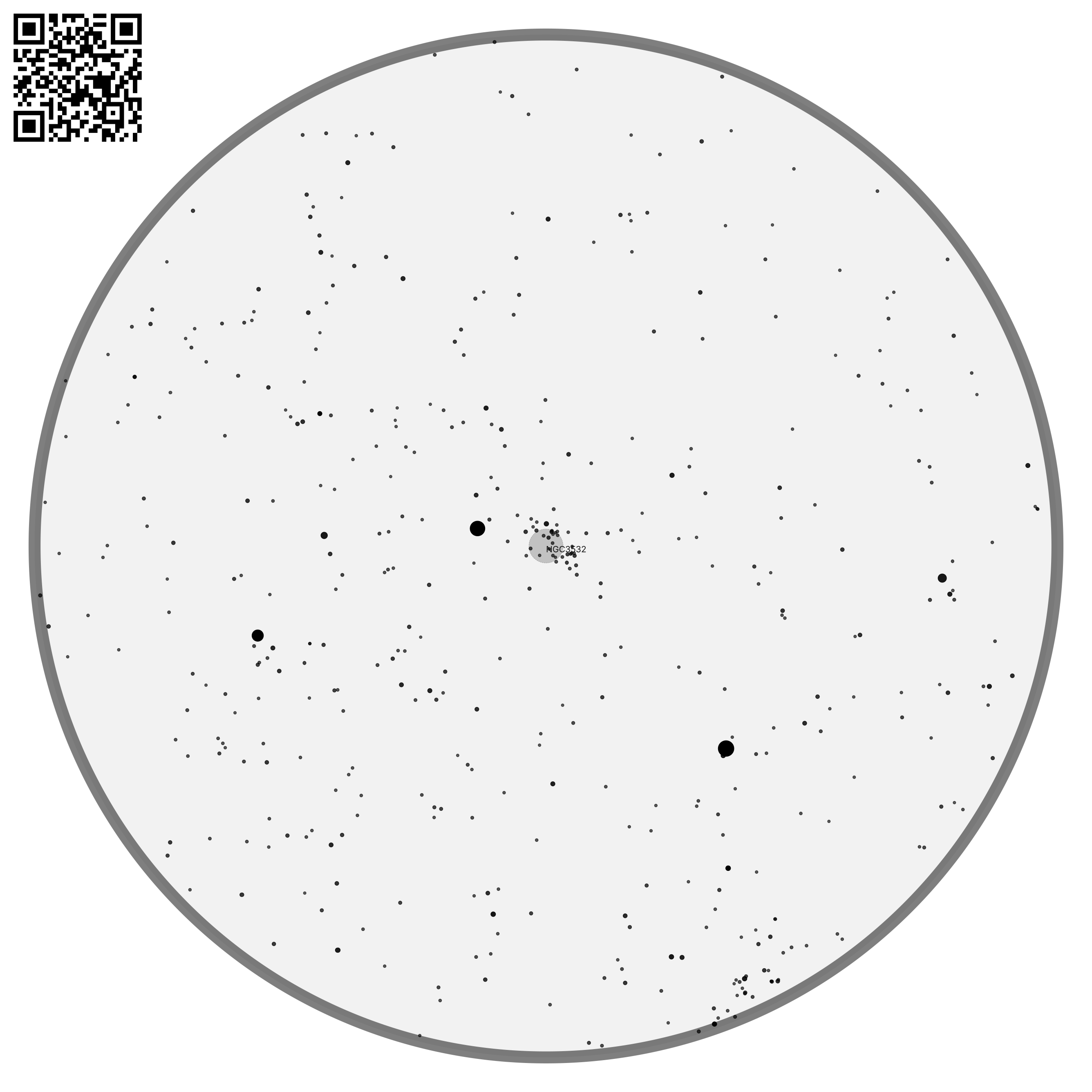
Finder scope & binocular view of NGC 3532
| Property | Value |
|---|---|
| Common names | Wishing Well Cluster, Football Cluster, Firefly Cluster |
| Catalog names | C 91, NGC 3532, Cr 238, Mel 103, vdB-Ha 109 |
| Type | Stellar Cluster |
| Subtype | Open Cluster |
| Coordinates | 11h 05m 33.90s, -58° 42’ 13.00” |
| Season | February - April |
| Best month | March |
| Beginner friendly | Yes |
| Visual reward | High |
| Filters required | None |
| LP tolerance | High |
| Minimum equipment | Naked eye |
| Optimal equipment | Binoculars |
| Magnitude | 3.0 |
| Size | 50.0 arcminutes x 50.0 arcminutes |
| Constellation | Carina |
Observation Notes
Naked Eye
Visible from dark skies as a large, prominent grouping of stars, appearing partially resolved rather than purely nebulous and clearly distinct from the surrounding star fields.
Binoculars
A superb binocular object, resolving into a rich spray of dozens of bright stars spread across a wide field. The view is often likened to scattered diamonds against a dark background.
Small Telescope
At low power, reveals many dozens to well over a hundred stars across a broad field. Loose star chains, subtle color differences, and an overall elongated or oval outline are often apparent under good conditions.
Medium Telescope
Produces an extremely rich star field with numerous faint members visible. The cluster shows strong visual depth and color contrast between blue-white stars and several warmer yellow or orange members, though its structure remains loose rather than centrally condensed.
Large Telescope
Often cannot frame the entire cluster at once, even at low power. Best used to explore specific regions, examine individual stars or close pairs, and appreciate the overall richness rather than for viewing the cluster as a single object.