IC 2602
Binoculars • Open Clusters
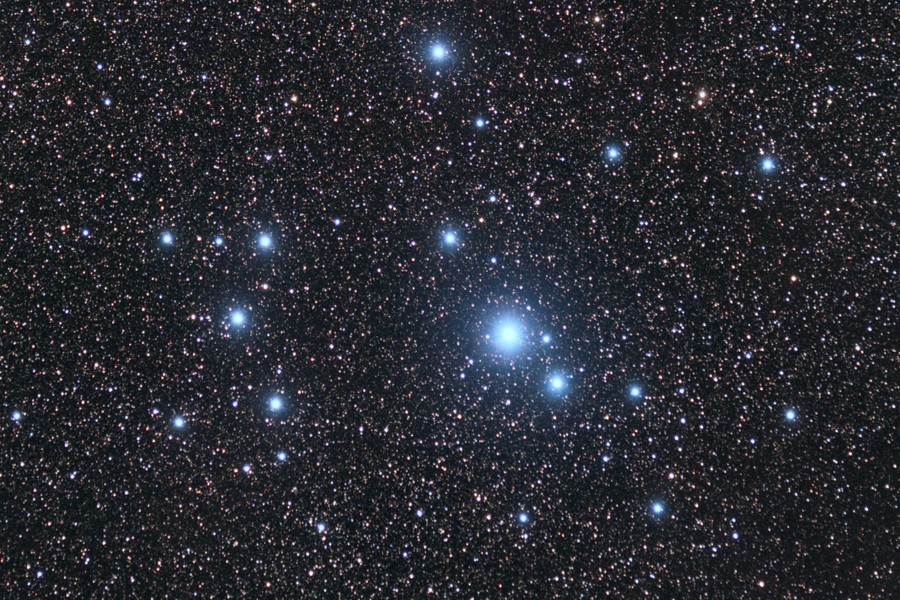
Image: Tel Lekatsas
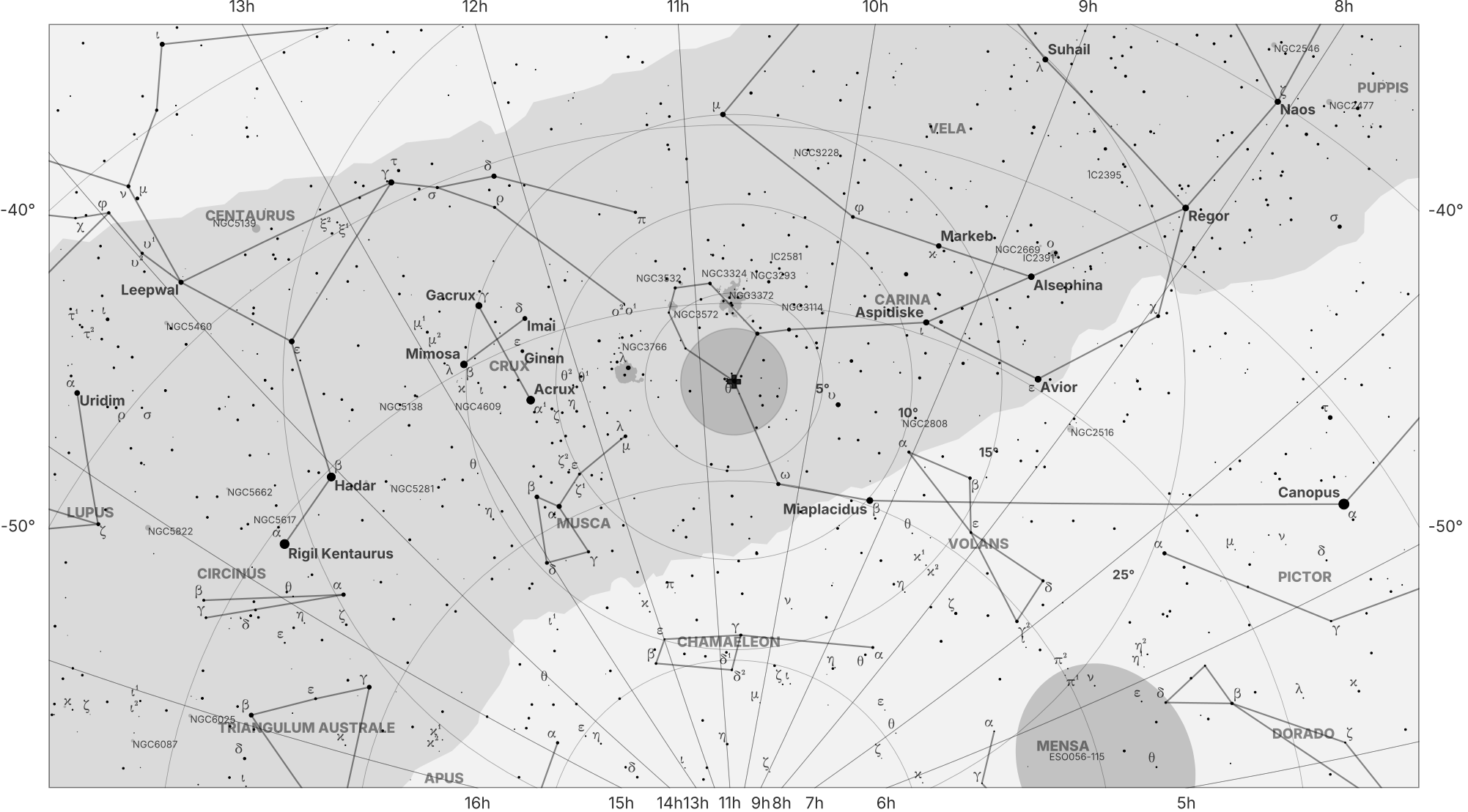
Finder map for IC 2602
Widely known as the ‘Southern Pleiades’ throughout the Southern Hemisphere, serving as a prominent celestial landmark and a signpost for the southern summer/autumn skies. Invisible north of about 26° N latitude. At 25° N it culminates only about 1° above the southern horizon (and ~6° at 20° N), so an exceptionally clear, flat southern horizon is required. Well placed for all Southern Hemisphere observers. Its low altitude for most northern hemisphere observers is the primary challenge. Resolving faint members requires dark skies.
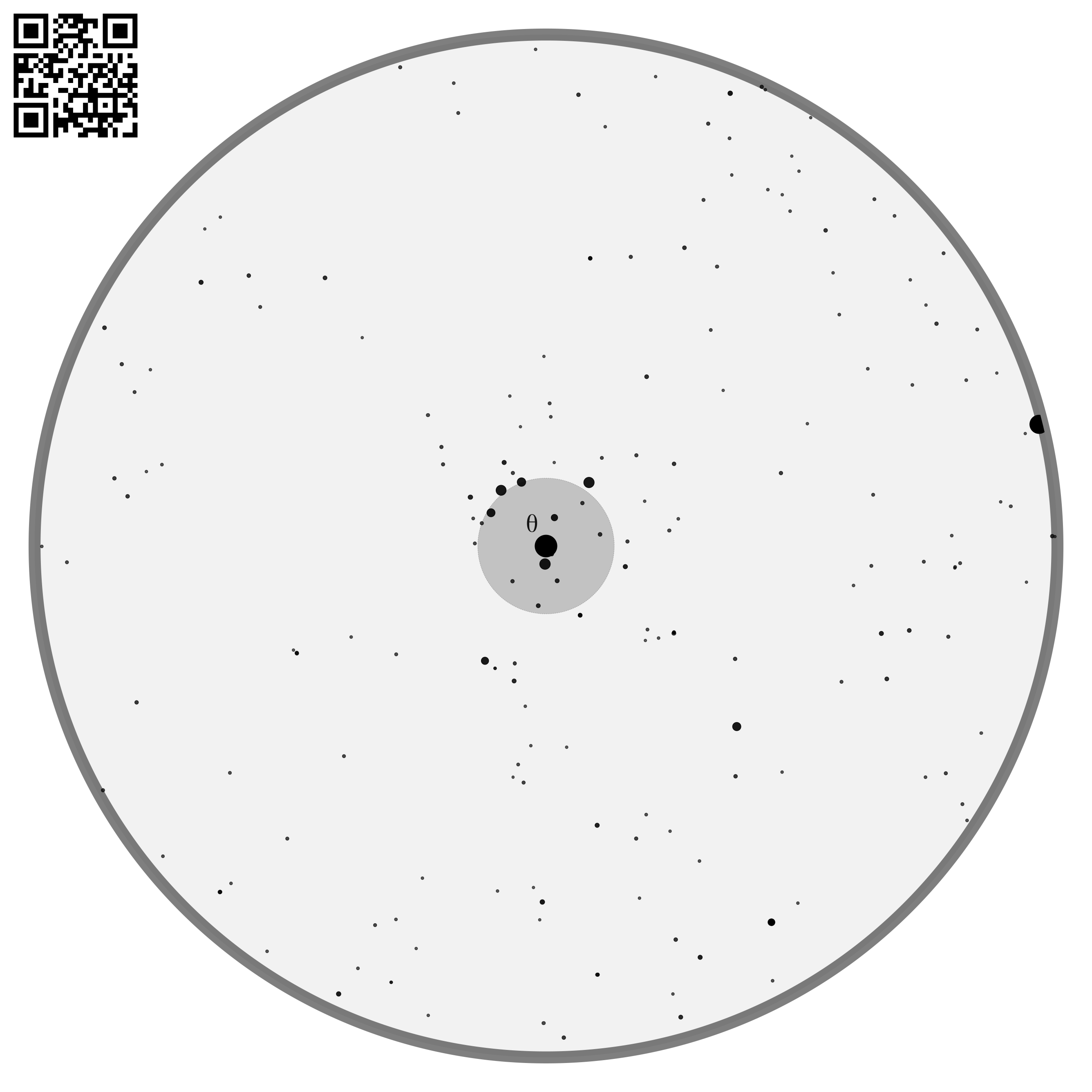
Finder scope & binocular view of IC 2602
| Property | Value |
|---|---|
| Common names | Southern Pleiades, Theta Carinae Cluster |
| Catalog names | C 102, IC 2602, Cr 229, Mel 102, vdB-Ha 103 |
| Type | Stellar Cluster |
| Subtype | Open Cluster |
| Coordinates | 10h 42m 55.90s, -64° 25’ 22.00” |
| Season | February - April |
| Best month | March |
| Beginner friendly | Yes |
| Visual reward | High |
| Filters required | None |
| LP tolerance | High |
| Minimum equipment | Naked eye |
| Optimal equipment | Binoculars |
| Magnitude | 1.6 |
| Size | 100.0 arcminutes x 100.0 arcminutes |
| Constellation | Carina |
Observation Notes
Naked Eye
Easily visible from dark skies as a prominent, loose concentration of stars surrounding Theta Carinae. From darker suburban locations it remains obvious, though it may appear more stellar than hazy.
Binoculars
Provides a superb view, resolving into a brilliant scattering of dozens of bright blue-white stars spread across a wide field. Often compared to a larger, more loosely arranged version of the Pleiades.
Small Telescope
A rich-field telescope at low power frames the cluster well, revealing additional fainter members and casual stellar groupings that enhance its visual richness.
Medium Telescope
Allows closer inspection of individual stars, with the dominant blue-white B- and A-type members most apparent. Subtle color differences among some fainter stars may be noticed under good conditions.
Large Telescope
Not well suited for viewing the cluster as a whole due to its large angular size, but useful for examining individual members or splitting close double stars within the cluster.