Messier 6
Binoculars • Open Clusters
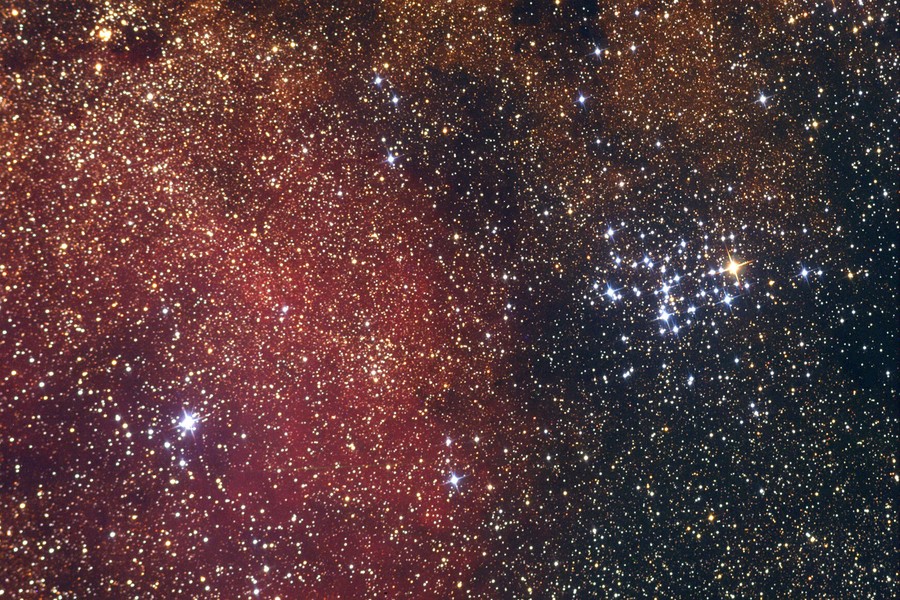
Image: KPNO/NOIRLab/NSF/AURA/Lawrence Johnson and Kathy Ortega/Adam Block
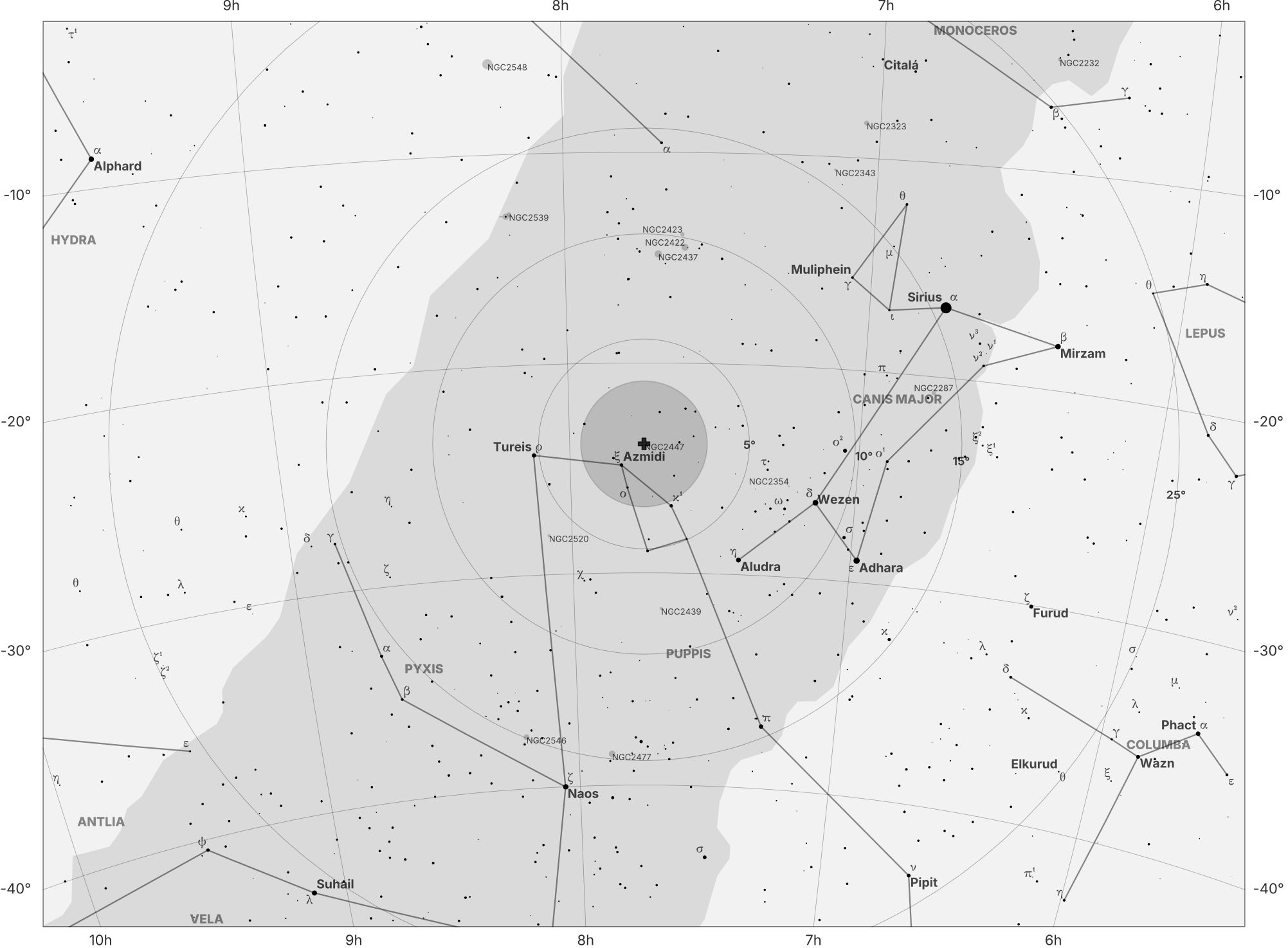
Finder map for Messier 6
Requires a clear southern horizon for most northern hemisphere observers; culminates high in the sky for southern observers. Recognizing the cluster’s characteristic “butterfly” or V-shaped pattern and picking out the contrasting orange-red giant stars among the numerous blue-white members. Dark skies help reveal the full richness of the cluster.
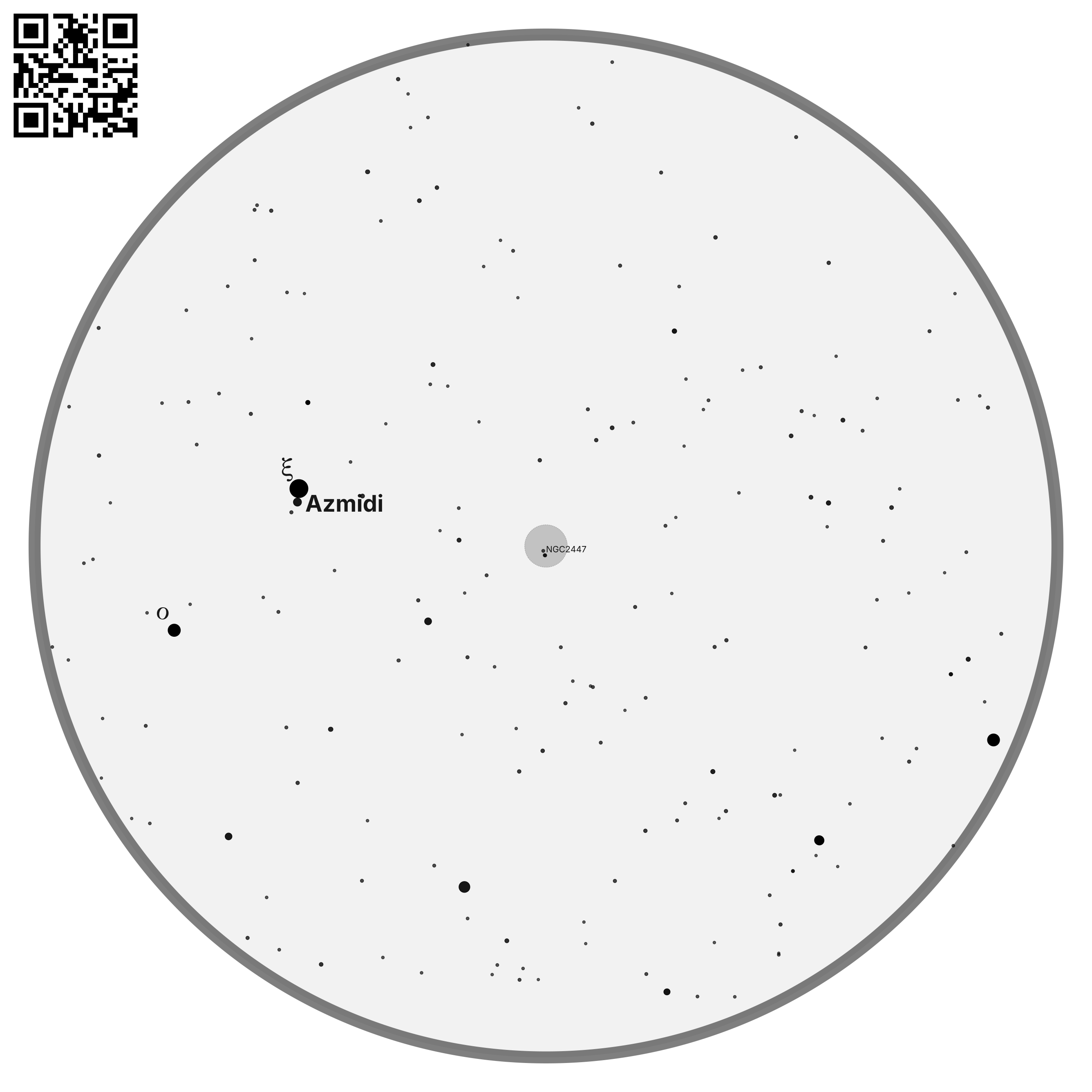
Finder scope & binocular view of Messier 6
| Property | Value |
|---|---|
| Common names | Butterfly Cluster |
| Catalog names | M 6, NGC 6405 |
| Type | Stellar Cluster |
| Subtype | Open Cluster |
| Coordinates | 7h 44m 34.60s, -23° 51’ 22.00” |
| Season | December - February |
| Best month | Mid-January |
| Beginner friendly | Marginal |
| Visual reward | Moderate |
| Filters required | None |
| LP tolerance | Medium |
| Minimum equipment | Binoculars |
| Optimal equipment | Small telescope |
| Magnitude | 6.2 |
| Size | 10.0 arcminutes x 10.0 arcminutes |
| Constellation | Scorpius |
Observation Notes
Naked Eye
Visible from dark skies as a bright, loose cluster near the “stinger” of Scorpius. It appears as a small patch of misty light, and in good conditions a few brighter stars are individually visible. From light-polluted skies it may be difficult or absent.
Binoculars
An excellent binocular target. Resolves into a rich group of bright stars; the “butterfly” impression can be suggested, though it is not always obvious at first glance and depends on sky quality and orientation.
Small Telescope
Provides a beautiful low-power view with dozens of stars. The cluster’s loose “wings” and central concentration are easy to appreciate. A prominent orange star in the field adds strong color contrast.
Medium Telescope
Reveals many more members across the field and enhances the impression of curved chains and groupings. The cluster remains best at low magnification; higher power reduces the overall pattern.
Large Telescope
Not ideal for viewing the cluster as a whole because the field becomes too narrow. Best used at low power to enjoy the richest star field, or to examine individual members and subtle color contrasts.