Wild Duck Cluster
Binoculars • Open Clusters
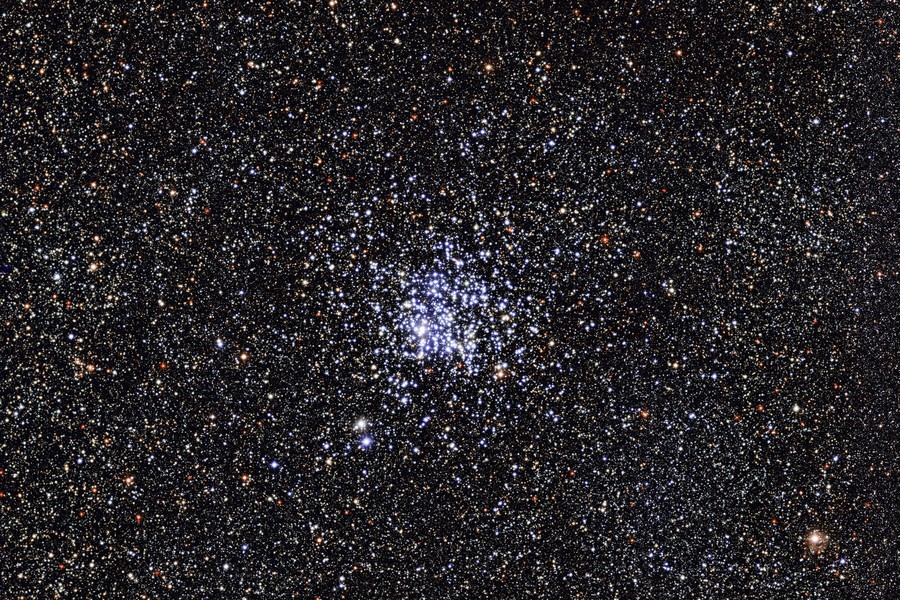
Image: ESO
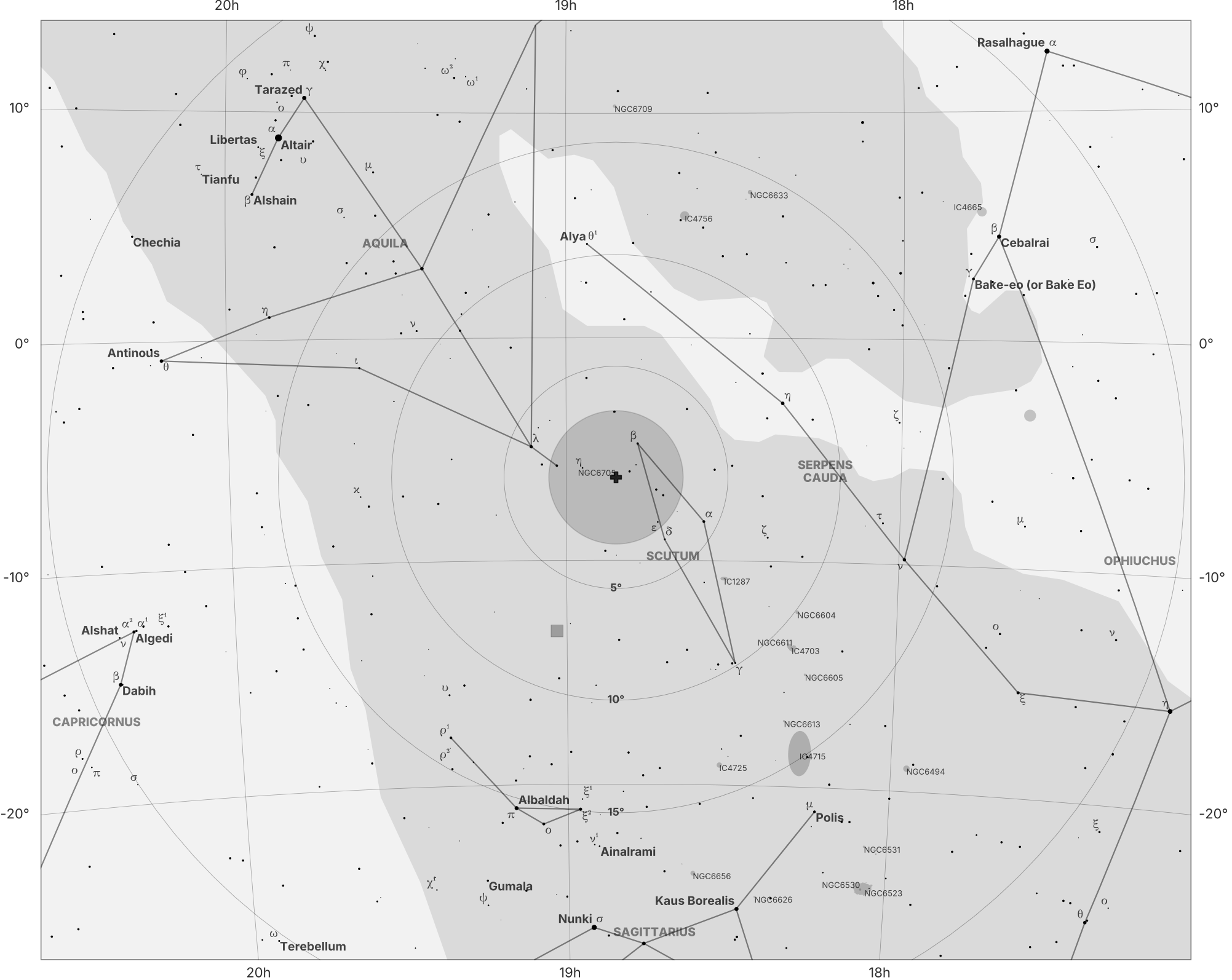
Finder map for Wild Duck Cluster
The popular and evocative name ‘Wild Duck Cluster’ makes it a favorite and memorable target for amateur astronomers, especially for summertime observing. Best observed when high in the summer sky. Its southern declination can make it challenging from far northern latitudes. Resolving the very dense core into individual stars requires good seeing conditions and sufficient aperture (6 inches or more).
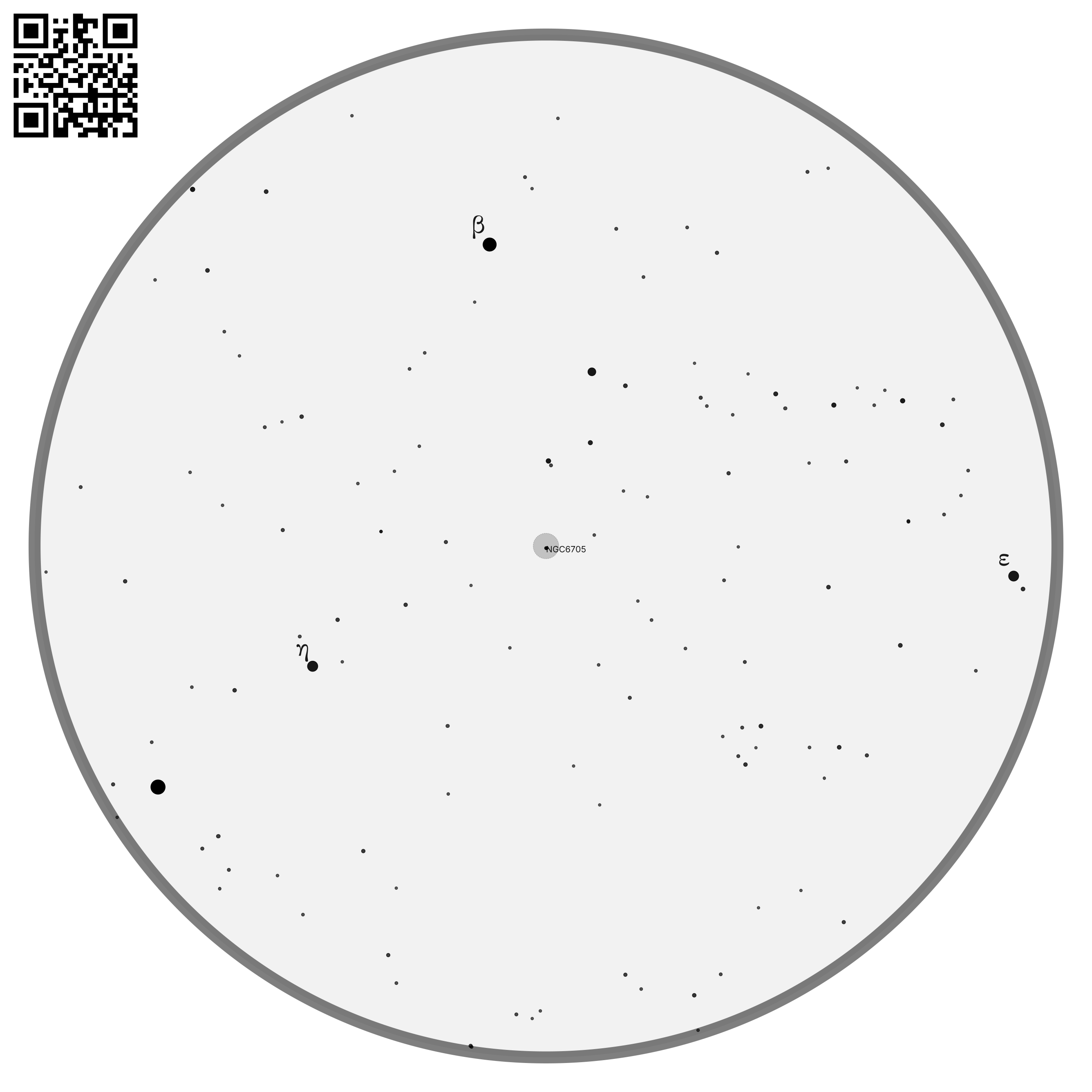
Finder scope & binocular view of Wild Duck Cluster
| Property | Value |
|---|---|
| Common names | Messier 11, M11 |
| Catalog names | M 11, NGC 6705, Cr 391, Mel 213 |
| Type | Stellar Cluster |
| Subtype | Open Cluster |
| Coordinates | 18h 51m 03.70s, -6° 16’ 18.00” |
| Season | June - August |
| Best month | July |
| Beginner friendly | Marginal |
| Visual reward | High |
| Filters required | None |
| LP tolerance | Medium |
| Minimum equipment | Binoculars |
| Optimal equipment | Small telescope |
| Magnitude | 5.8 |
| Size | 11.0 arcminutes x 11.0 arcminutes |
| Constellation | Scutum |
Observation Notes
Naked Eye
Marginally visible to experienced observers under very dark, transparent skies (typically Bortle 1–2) as a faint, hazy patch set against the Scutum Star Cloud.
Binoculars
Easily seen as a small, compact, misty knot of light that stands out clearly from the surrounding Milky Way star field.
Small Telescope
Begins to resolve into a granular patch of starlight, with the brightest members separating into individual points. The overall shape starts to become suggestive but remains indistinct.
Medium Telescope
Resolves dozens of stars, forming a rich, wedge- or fan-shaped grouping with a noticeably concentrated central region. The origin of the “Wild Duck” nickname becomes apparent under good conditions.
Large Telescope
Reveals a very rich open cluster, with hundreds of pinpoint stars superimposed on a background glow of unresolved members. The central region appears crowded and sparkling, though it retains the character of a dense open cluster rather than a globular core.