Coma Star Cluster
Binoculars • Clusters
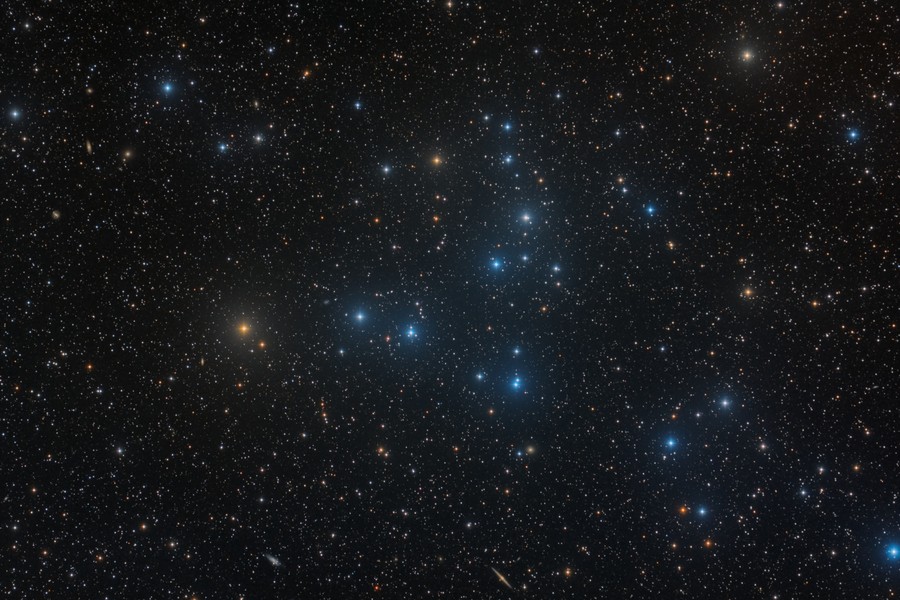
Image: Alberto Pisabarro
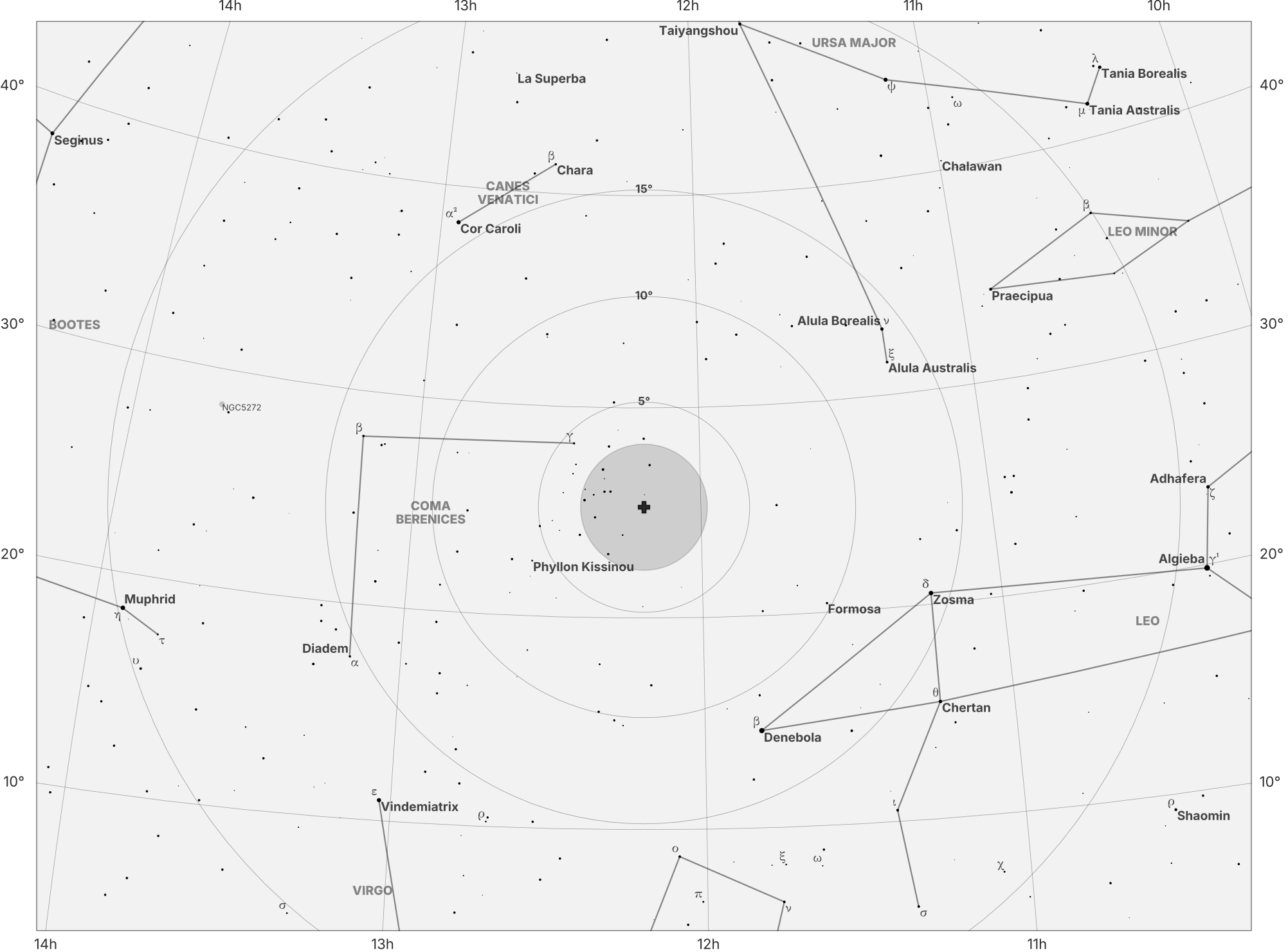
Finder map for Coma Star Cluster
Represents the golden tresses of Queen Berenice II of Egypt in Greek mythology. She sacrificed her hair to Aphrodite for the safe return of her husband, Ptolemy III, from war. The hair was then placed in the heavens as the constellation Coma Berenices. Best viewed when high in the sky to minimize atmospheric distortion and light pollution effects. Its extreme angular size and sparseness make it difficult to frame in a typical telescope; it can be mistaken for a random patch of bright stars. It is best appreciated with a very wide field of view.
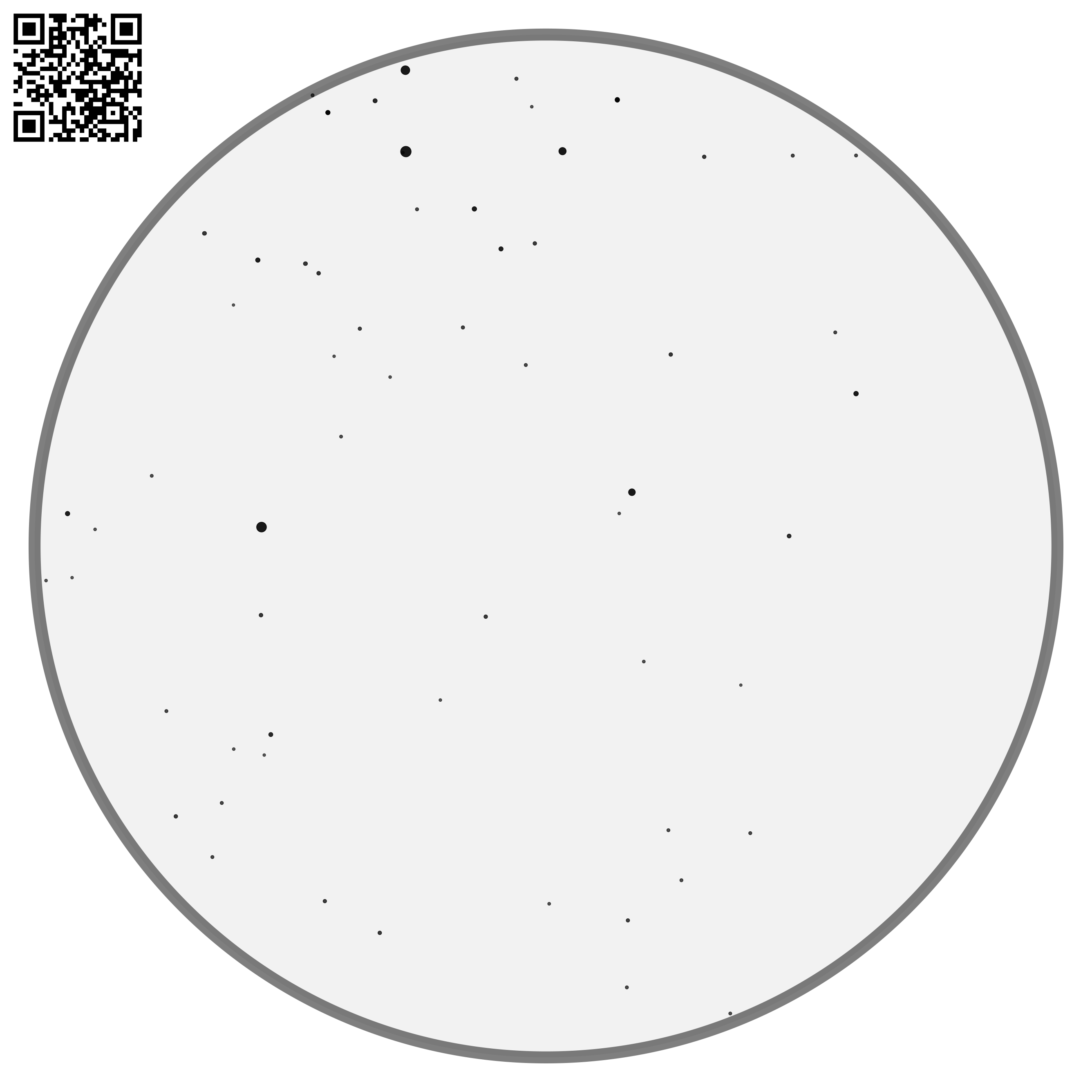
Finder scope & binocular view of Coma Star Cluster
| Property | Value |
|---|---|
| Common names | Melotte 111, Coma Berenices Cluster |
| Catalog names | Cr 256, Mel 111 |
| Type | Stellar Cluster |
| Subtype | Open Cluster |
| Coordinates | 12h 11m 54.90s, +25° 16’ 36.00” |
| Season | March - May |
| Best month | April |
| Beginner friendly | Marginal |
| Visual reward | Low |
| Filters required | None |
| LP tolerance | Low |
| Minimum equipment | Naked eye |
| Optimal equipment | Binoculars |
| Magnitude | 1.8 |
| Size | 450.0 arcminutes x 450.0 arcminutes |
| Constellation | Coma Berenices |
Observation Notes
Naked Eye
Visible to the unaided eye from dark skies (typically Bortle 4–5 or better) as a loose, widespread grouping of individual stars rather than a nebulous patch. The cluster is best recognized by its distinct star pattern near Gamma Comae Berenices.
Binoculars
An outstanding binocular object. The cluster resolves into a rich, sprawling field of several dozen stars spread across roughly 5 degrees, making it one of the finest wide-field binocular targets in the sky.
Small Telescope
Generally too large to be framed in a single field of view with typical small telescopes. Short-focus or rich-field instruments at very low power can partially capture its extent, but sweeping the area provides a better sense of scale.
Medium Telescope
Poorly suited for viewing the cluster as a whole, as the wide context is lost. Best used only to examine individual member stars or small star groupings within the cluster.
Large Telescope
Unsuitable for appreciating the cluster itself. The very wide angular size means increased aperture does not enhance the view, and the object is better enjoyed with naked eye or binoculars.