NGC 457
4-8 inch Telescope • Open Clusters Rich
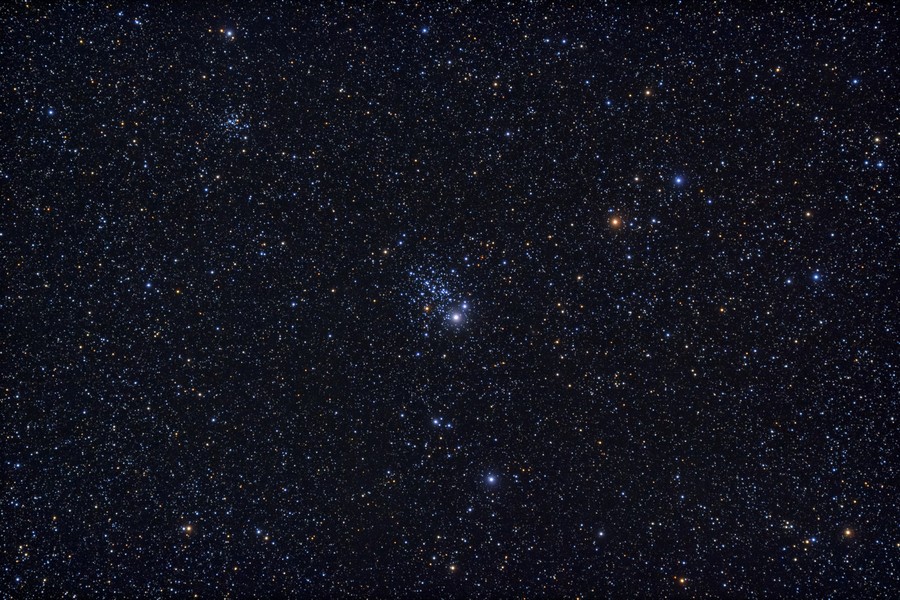
Image: Anton Vakulenko
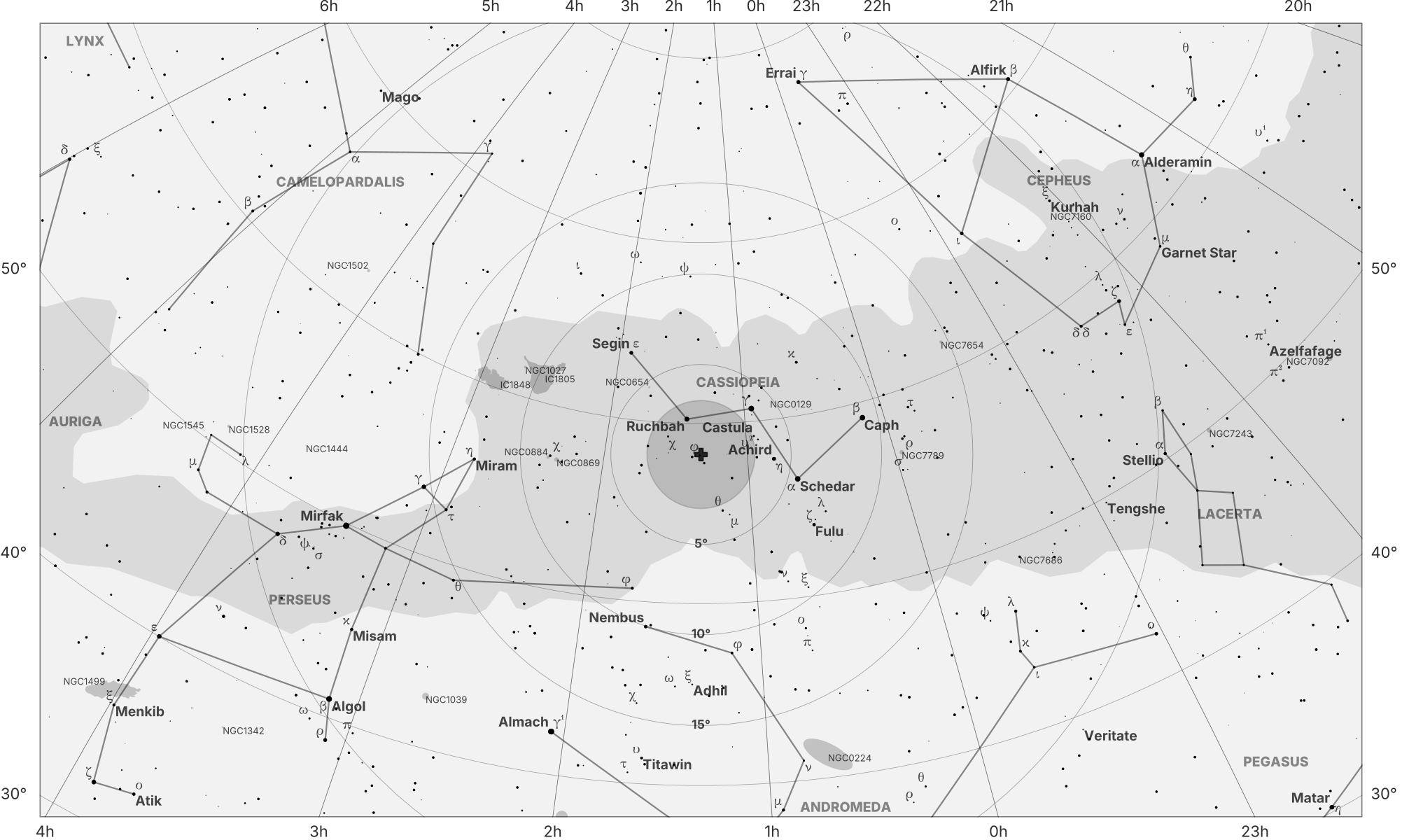
Finder map for NGC 457
ts fame lies almost entirely within the amateur astronomy community, where its distinctive pattern has earned it well-established nicknames such as the “Owl Cluster” and the “E.T. Cluster,” making it a popular target for star parties and public outreach. Best observed from the Northern Hemisphere. With a declination near +58°, it is circumpolar for observers north of about 32° N and thus visible year-round from much of the mid- to high-northern latitudes. Discerning the subtle color difference between the two primary ‘eye’ stars and resolving the faintest members of the cluster from the background starfield.
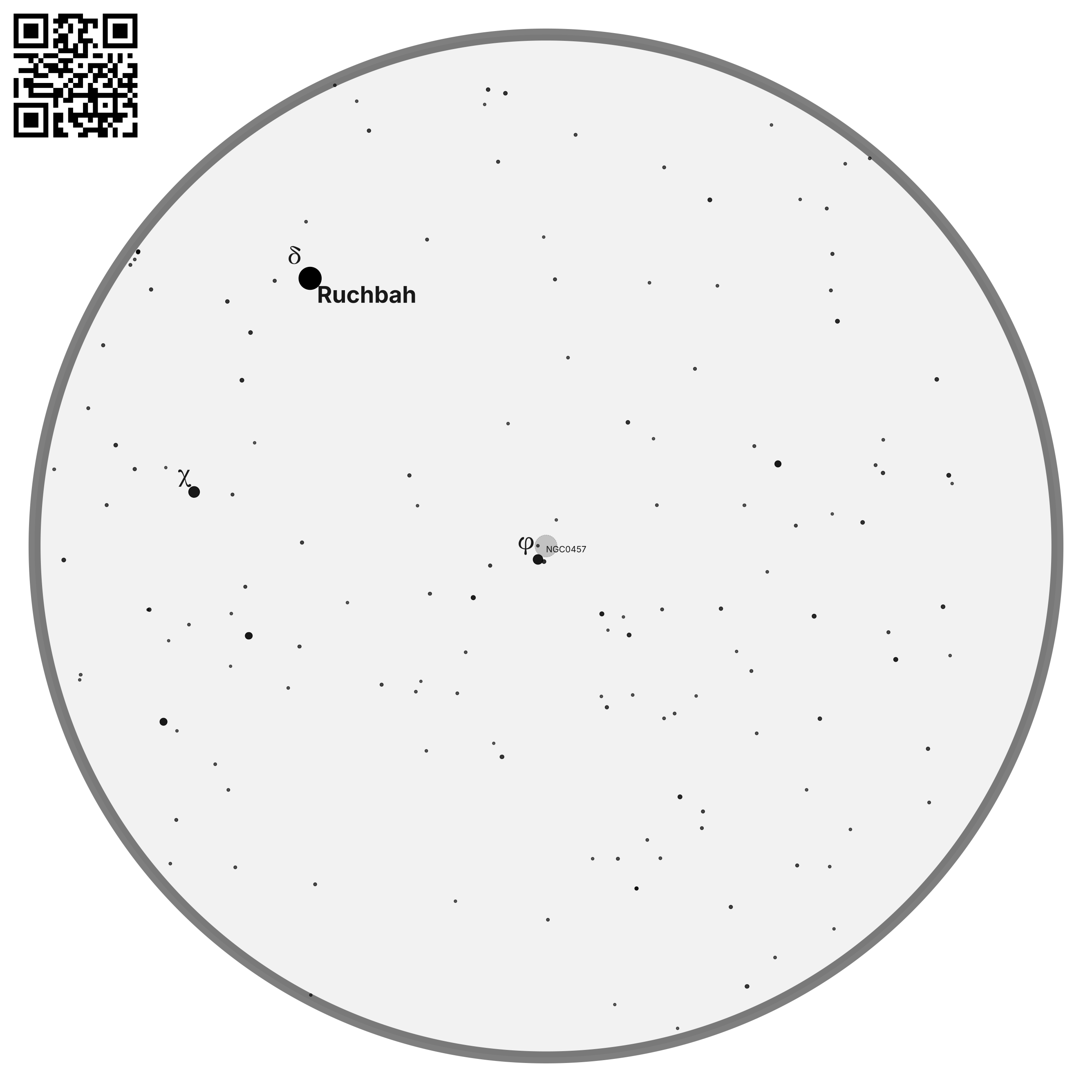
Finder scope & binocular view of NGC 457
| Property | Value |
|---|---|
| Common names | Owl Cluster, ET Cluster, Skipper Cluster, Dragonfly Cluster, Caldwell 13 |
| Catalog names | C 13, NGC 457, Cr 12, Mel 7 |
| Type | Stellar Cluster |
| Subtype | Open Cluster |
| Coordinates | 1h 19m 32.40s, +58° 16’ 40.00” |
| Season | September - November |
| Best month | Mid-October |
| Beginner friendly | Yes |
| Visual reward | High |
| Filters required | None |
| LP tolerance | High |
| Minimum equipment | Binoculars |
| Optimal equipment | Small telescope |
| Magnitude | 6.4 |
| Size | 20.0 arcminutes x 20.0 arcminutes |
| Constellation | Cassiopeia |
Observation Notes
Naked Eye
Under exceptionally dark, transparent skies, it may be suspected as a very faint, small, misty patch near the “W” of Cassiopeia, but naked-eye detection is uncertain and not routine.
Binoculars
Easily resolved into a distinct stellar grouping, with the two bright “eye” stars immediately prominent and the overall pattern readily apparent.
Small Telescope
In 4–6 inch apertures, the characteristic “ET” or “Owl” shape is unmistakable at low to moderate magnification, resolving dozens of member stars. Clear color contrast is visible between the yellowish Phi Cassiopeiae and the bluish-white companion stars.
Medium Telescope
With 8–12 inches, many dozens of stars are resolved across the cluster, and the stick-figure pattern remains recognizable against the rich Milky Way background, with additional faint members appearing using averted vision.
Large Telescope
In apertures of roughly 14 inches and larger, the field becomes densely populated with faint stars. While the iconic shape can be visually diluted by the sheer number of resolved members, the cluster presents a rich view of a young stellar field rather than a strongly concentrated core.