NGC 663
4-8 inch Telescope • Open Clusters Rich
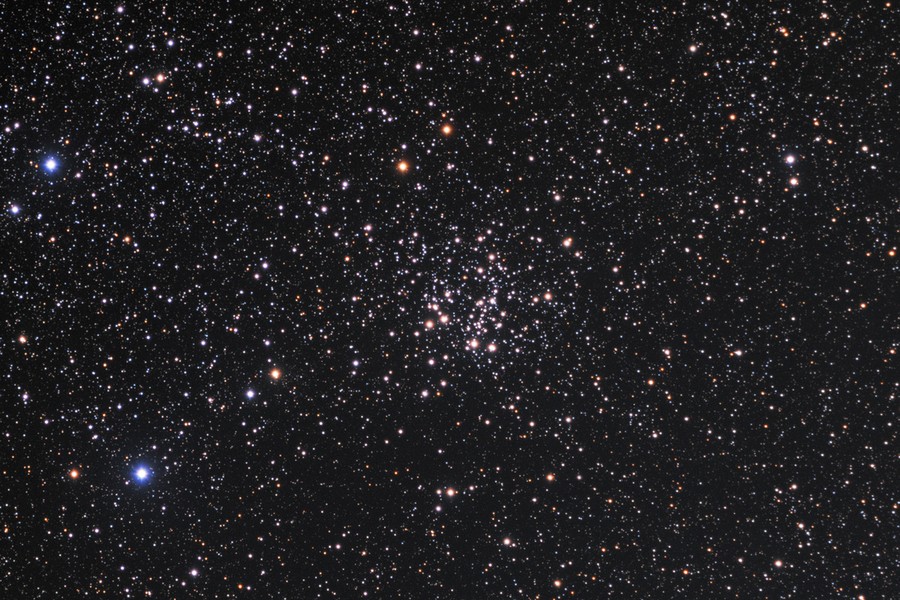
Image: Hewholooks
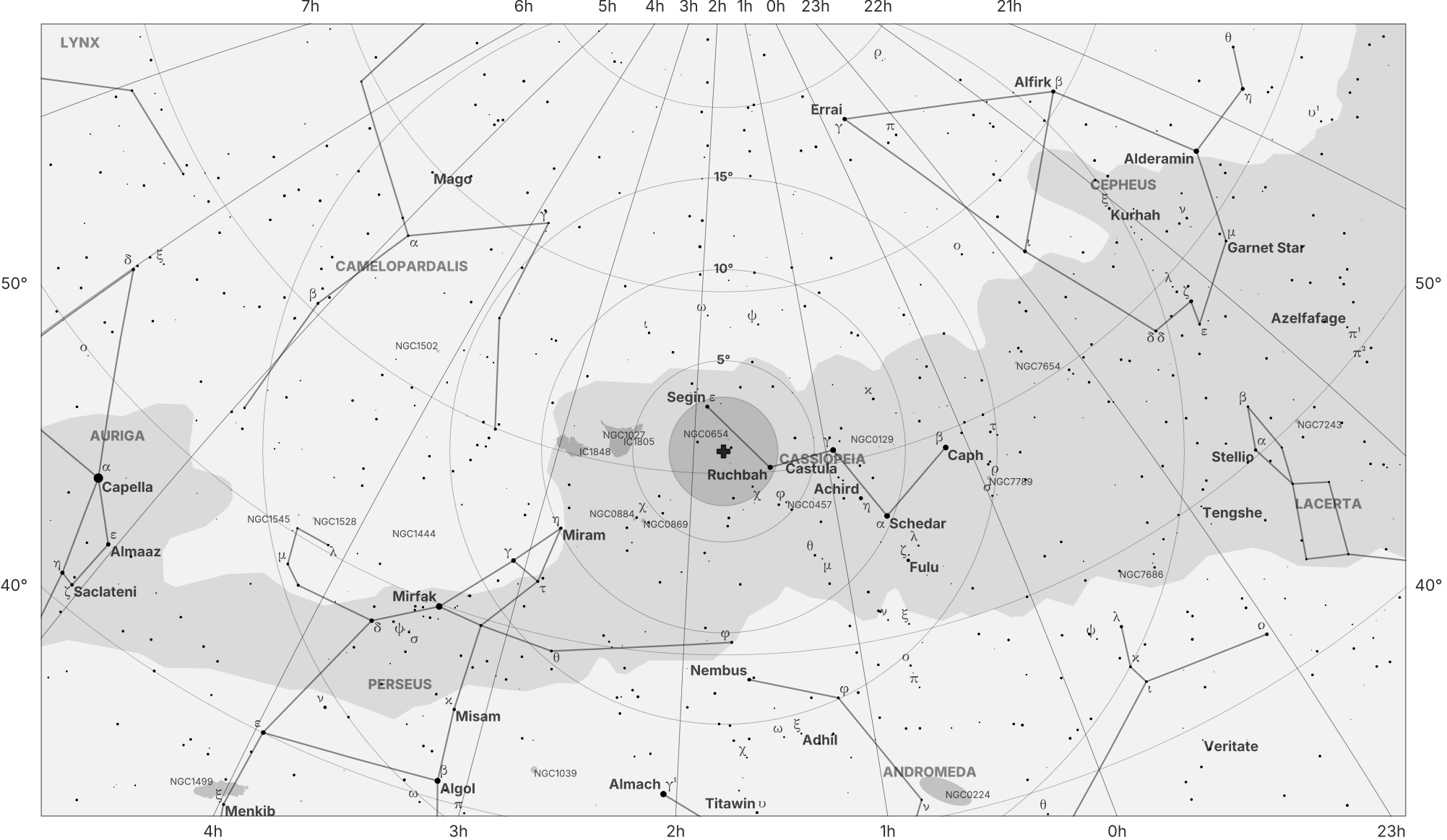
Finder map for NGC 663
Best observed from the Northern Hemisphere. With a declination near +61°, it is circumpolar for observers north of about 30° N and reaches high altitude for most mid-northern latitudes. It is poorly placed from the Southern Hemisphere. The main challenge is resolving the crowded central region and distinguishing true cluster members from the dense Milky Way background stars of Cassiopeia.
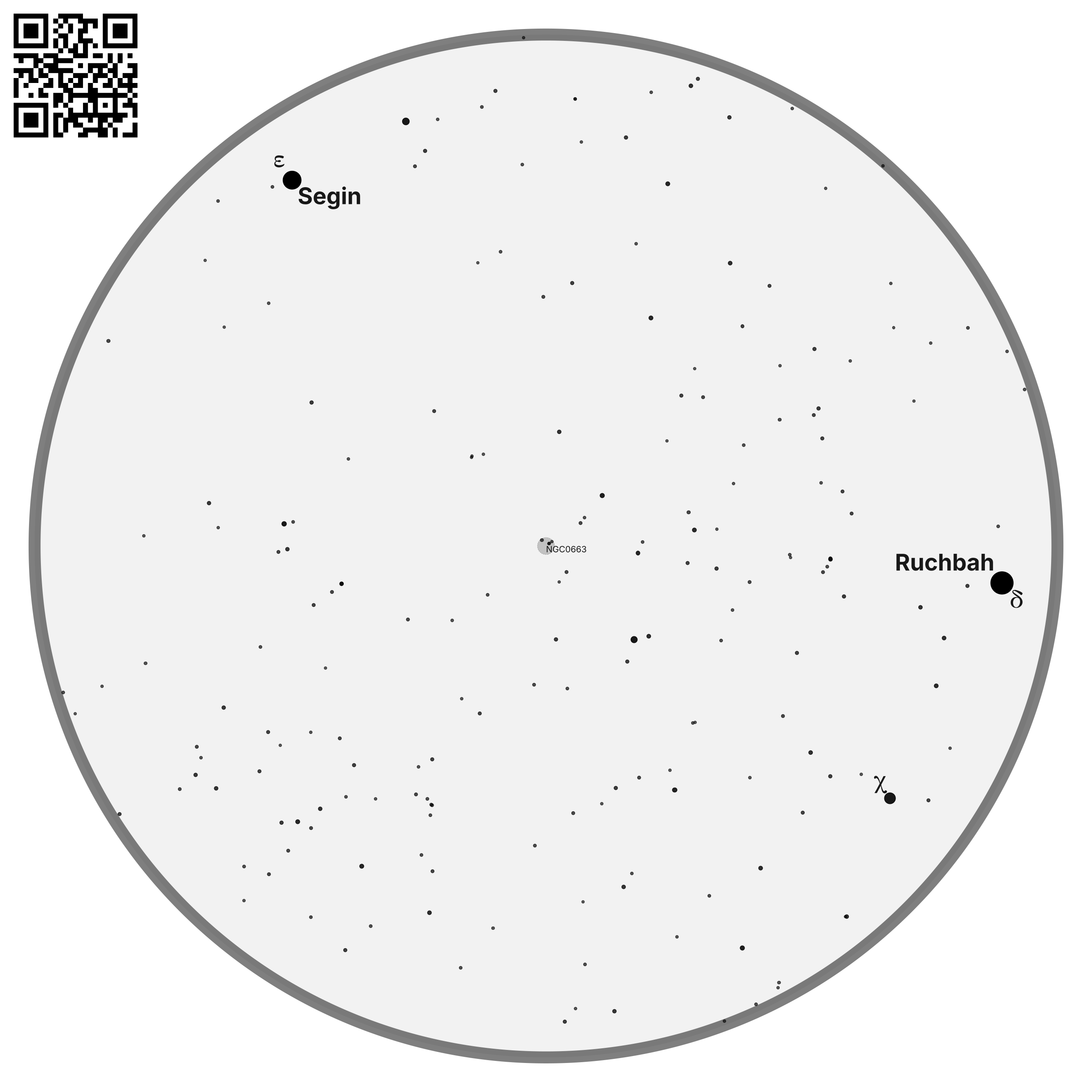
Finder scope & binocular view of NGC 663
| Property | Value |
|---|---|
| Common names | Caldwell 10, Pearl Cluster |
| Catalog names | C 10, NGC 663, Cr 20, Mel 11 |
| Type | Stellar Cluster |
| Subtype | Open Cluster |
| Coordinates | 1h 46m 22.20s, +61° 12’ 53.00” |
| Season | September - November |
| Best month | Mid-October |
| Beginner friendly | Marginal |
| Visual reward | Moderate |
| Filters required | None |
| LP tolerance | High |
| Minimum equipment | Small telescope |
| Optimal equipment | Medium telescope |
| Magnitude | 7.1 |
| Size | 15.0 arcminutes x 15.0 arcminutes |
| Constellation | Cassiopeia |
Observation Notes
Naked Eye
Not visible.
Binoculars
Easily visible in 7×50 or 10×50 binoculars as a compact, unresolved cluster, appearing as a grainy concentration of light with a few brighter stars beginning to stand out against a background glow of fainter members.
Small Telescope
In 4–6 inch apertures, resolves into several dozen stars arranged in an irregular pattern, sometimes described as fan-shaped or loosely diamond-like. Two brighter stars are immediately prominent.
Medium Telescope
With 8–10 inches, many dozens of stars of varying magnitudes are resolved across the cluster, revealing its rich nature. Chains and small groupings of stars become apparent, with no sharply defined core.
Large Telescope
In apertures of roughly 12–14 inches and larger, the field becomes densely populated with faint stars throughout the cluster’s extent. The cluster remains loose and open in character, standing out clearly against the Milky Way background through stellar density rather than central concentration.