Messier 44
Binoculars • Open Clusters
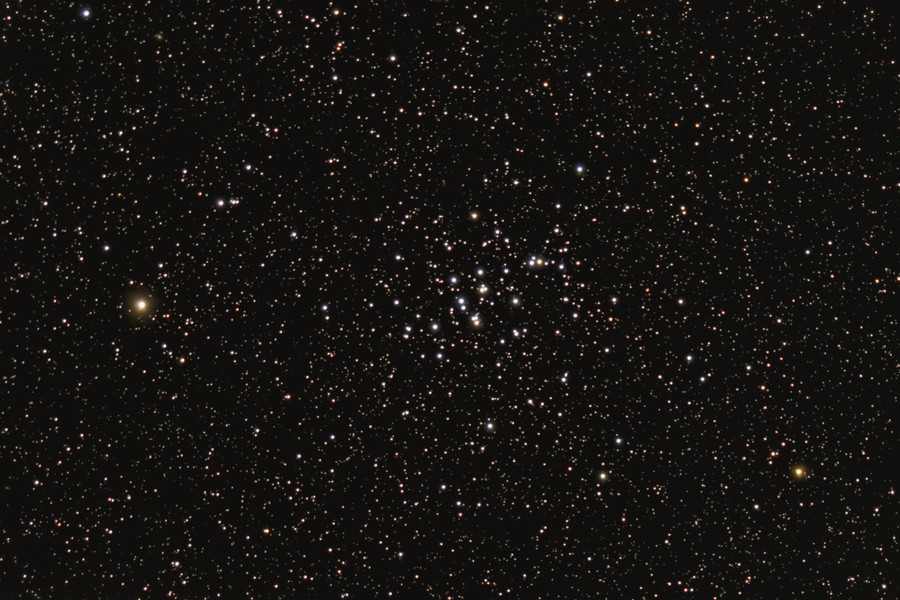
Image: Kevin M. Gill
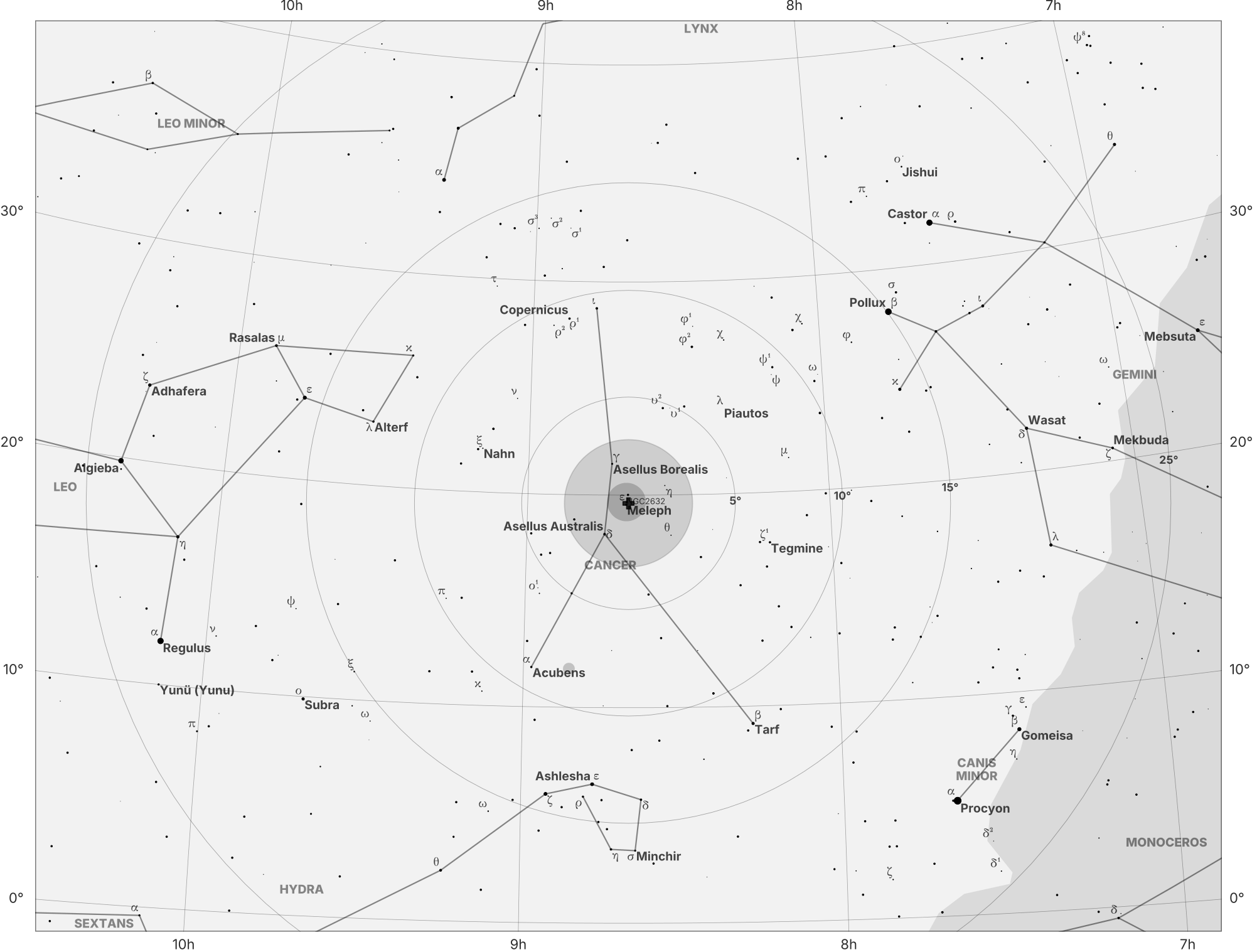
Finder map for Messier 44
In Greek and Roman mythology, the cluster represented the manger from which two donkeys (the stars Asellus Borealis and Australis) fed. Its disappearance from the sky was thought to portend a storm. Best viewed when high in the sky (above 30 degrees) to clear local obstructions and atmospheric haze. Resolving the faintest members requires dark skies. Identifying specific variable stars or the exoplanet host stars requires detailed charts and significant aperture.
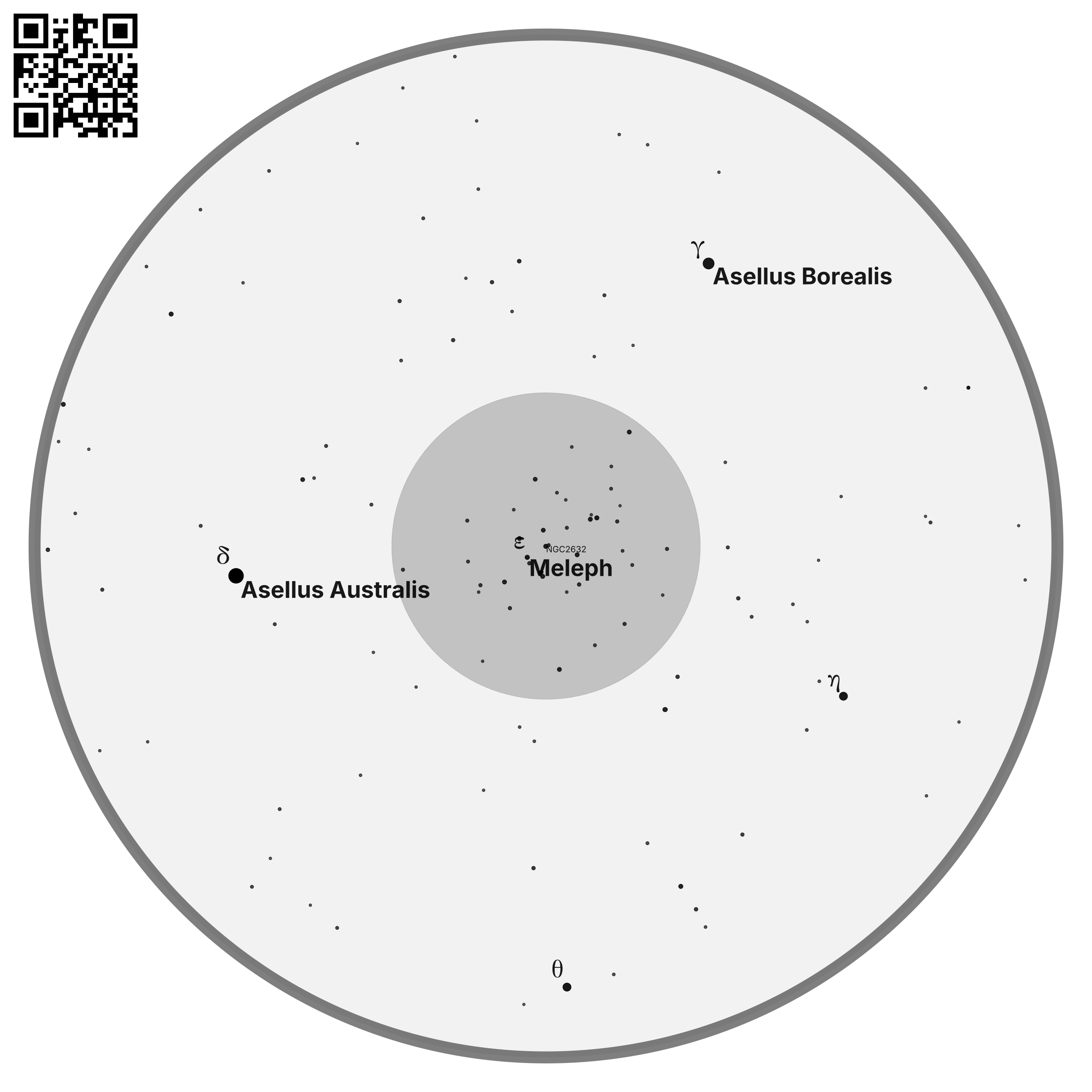
Finder scope & binocular view of Messier 44
| Property | Value |
|---|---|
| Common names | Beehive Cluster, Praesepe |
| Catalog names | M 44, NGC 2632, Cr 189, Mel 88 |
| Type | Stellar Cluster |
| Subtype | Open Cluster |
| Coordinates | 8h 39m 58.40s, +19° 36’ 33.00” |
| Season | January - March |
| Best month | February |
| Beginner friendly | Yes |
| Visual reward | High |
| Filters required | None |
| LP tolerance | High |
| Minimum equipment | Naked eye |
| Optimal equipment | Binoculars |
| Magnitude | 3.1 |
| Size | 70.0 arcminutes x 70.0 arcminutes |
| Constellation | Cancer |
Observation Notes
Naked Eye
From dark skies, appears as a large, diffuse, non-stellar glow in the constellation Cancer, easily visible without optical aid. From moderately light-polluted locations it may appear less distinct but is often still detectable as a hazy patch.
Binoculars
The ideal instrument for viewing the cluster. Binoculars resolve it into dozens of stars spread across a wide field, providing a spectacular and immediately recognizable view.
Small Telescope
Best viewed with a wide-field, low-power eyepiece to frame the entire cluster. Reveals additional fainter members beyond those seen in binoculars and highlights loose stellar groupings that add visual richness.
Medium Telescope
The cluster begins to overfill the field of view of typical eyepieces. Moderate magnification allows closer inspection of individual stars, with subtle color differences noticeable under good conditions, though the overall structure remains loose and extended.
Large Telescope
Not well suited for observing the cluster as a whole due to its very large angular size. More useful for examining individual member stars or background fields rather than for appreciating the cluster’s overall form.