NGC 4755
Binoculars • Open Clusters
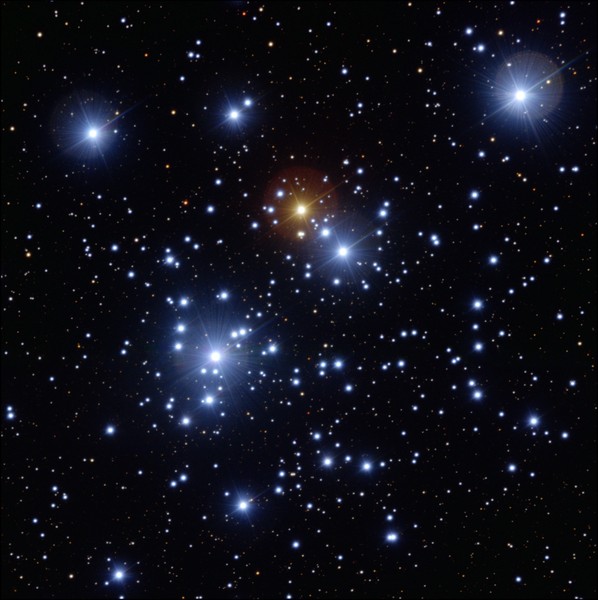
Image: ESO/Y. Beletsky
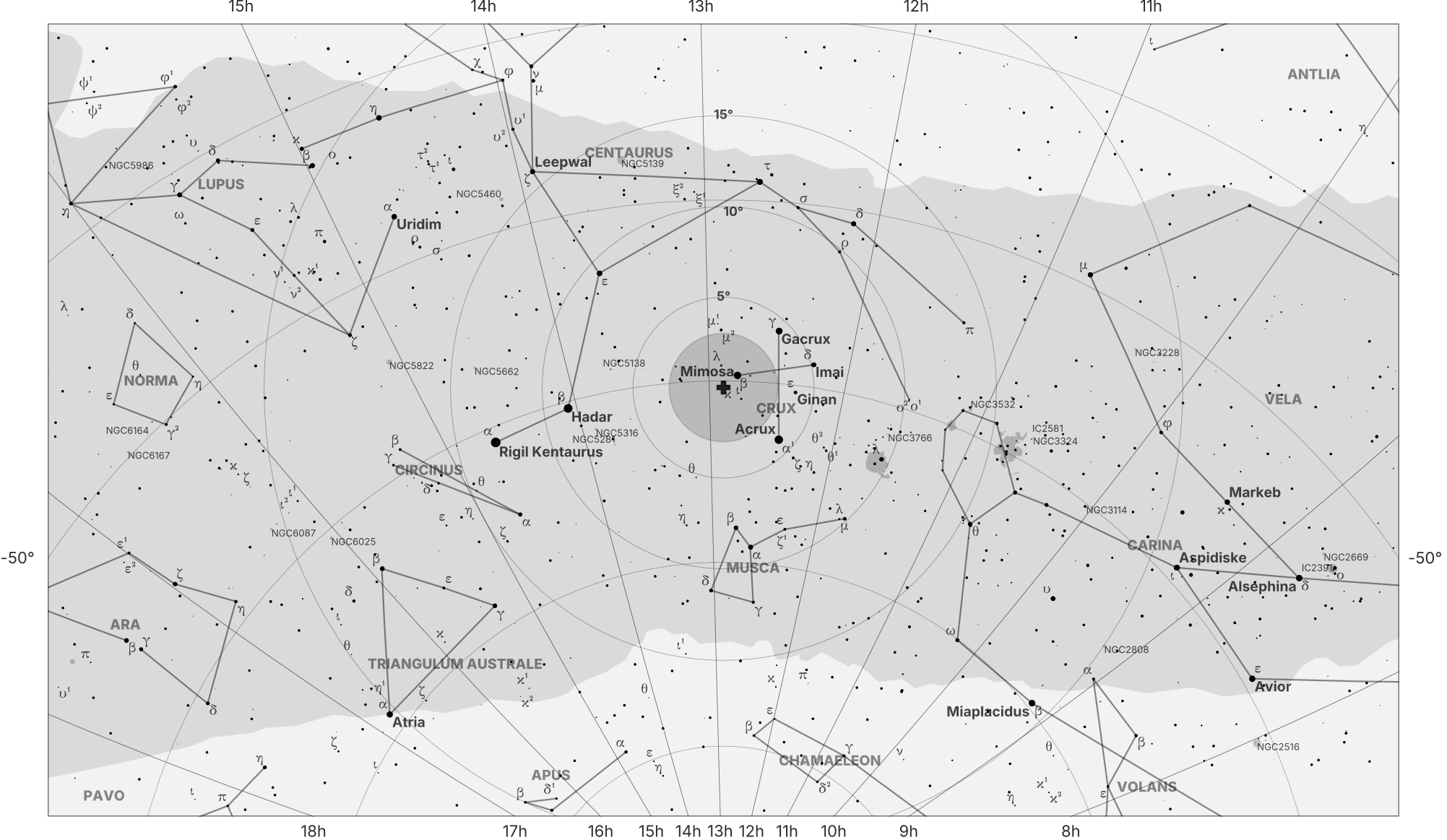
Finder map for NGC 4755
A premier showpiece object of the southern sky. Its name ‘Jewel Box’ perfectly captures its visual beauty and has made it a favorite target for amateur and professional astronomers alike. Requires a clear southern horizon for observers in the northern hemisphere (south of ~30° N latitude). High in the sky for southern hemisphere observers. Resolving the full range of stellar colors, especially the central red supergiant, against the bright blue-white background stars.
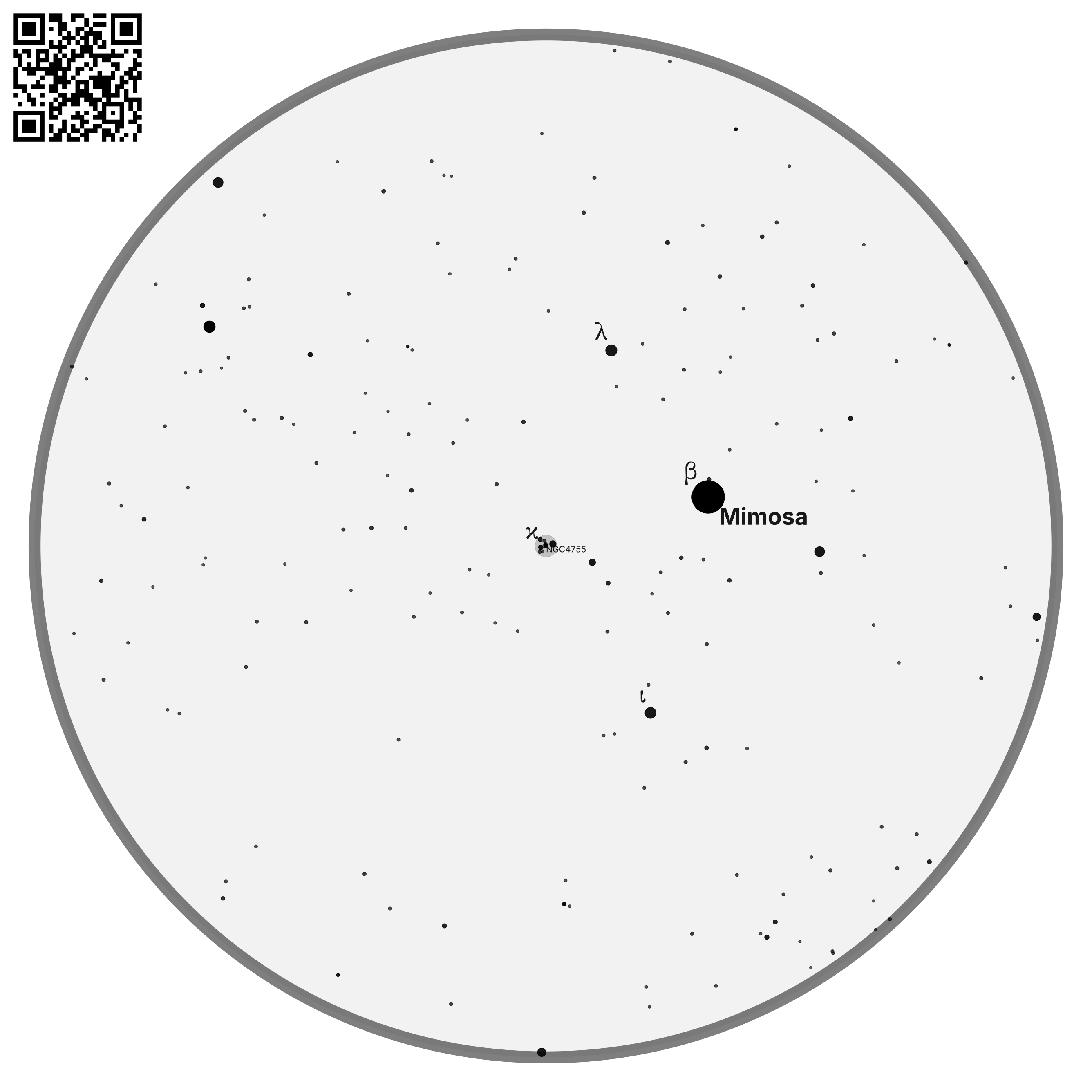
Finder scope & binocular view of NGC 4755
| Property | Value |
|---|---|
| Common names | Jewel Box Cluster, Kappa Crucis Cluster, Herschel’s Jewel Box |
| Catalog names | C 94, NGC 4755, Cr 264, Mel 114, vdB-Ha 141 |
| Type | Stellar Cluster |
| Subtype | Open Cluster |
| Coordinates | 12h 53m 39.20s, -60° 22’ 07.00” |
| Season | March - May |
| Best month | April |
| Beginner friendly | Marginal |
| Visual reward | High |
| Filters required | None |
| LP tolerance | High |
| Minimum equipment | Binoculars |
| Optimal equipment | Small telescope |
| Magnitude | 4.2 |
| Size | 10.0 arcminutes x 10.0 arcminutes |
| Constellation | Crux |
Observation Notes
Naked Eye
Appears as a single, slightly bloated, non-stellar point of light of about 4th magnitude near κ Crucis, and is easily mistaken for an ordinary star at first glance.
Binoculars
Resolves into a small, bright knot of stars, clearly non-stellar. Under good conditions, subtle structure within the cluster may be suggested, though individual patterns are not always obvious.
Small Telescope
A spectacular sight. Resolves dozens of stars with striking color contrast between blue-white members and a few orange stars. The characteristic “A”-shaped asterism in the core is easily seen.
Medium Telescope
Provides a rich and colorful view, with many additional faint members visible and vivid blue, white, and orange stars filling the field at moderate magnification.
Large Telescope
Can begin to over-magnify the cluster, reducing its jewel-like appearance. Best used at lower power to preserve context, or for examining individual stars and color contrasts in greater detail.