Messier 7
Binoculars • Open Clusters
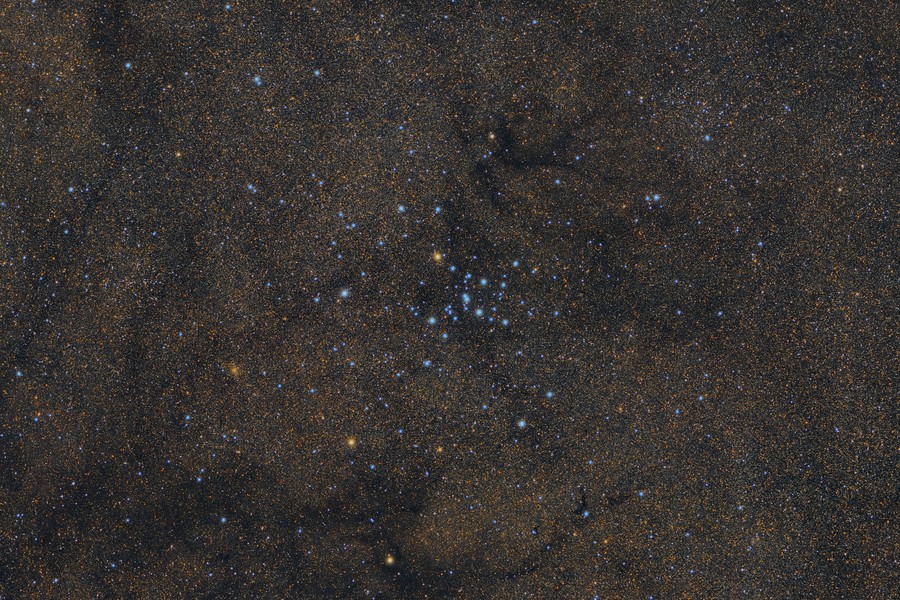
Image: Horizon Productions SFL
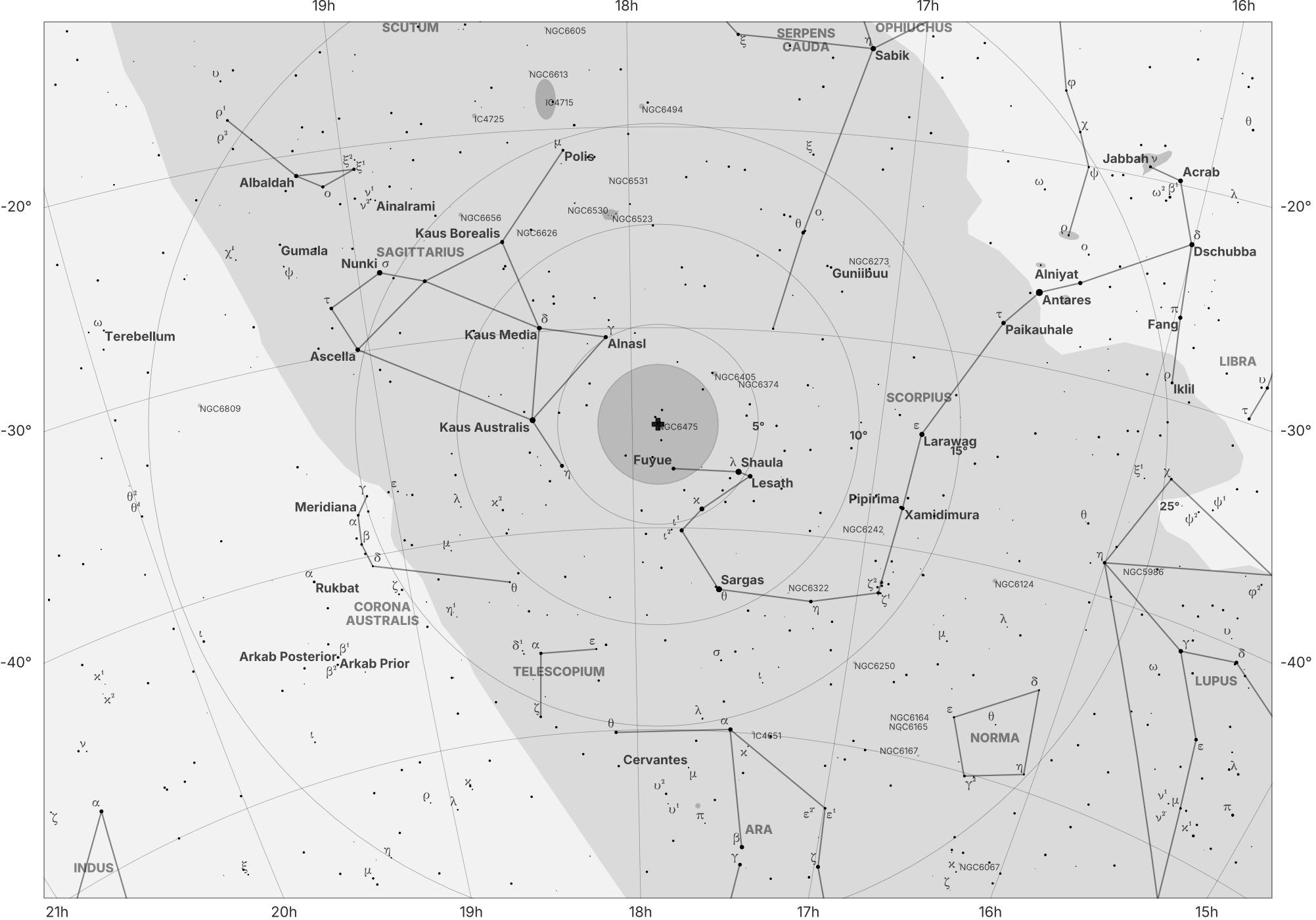
Finder map for Messier 7
Known since classical antiquity, the cluster was described by Claudius Ptolemy in the 2nd century CE and is often called Ptolemy’s Cluster. Its visibility to the naked eye makes it one of the few deep-sky objects recognized before the invention of the telescope, giving it a special place in the history of astronomy. Difficult for observers above 45°N latitude due to its low southern declination. Requires a clear, unobstructed southern horizon. For northern hemisphere observers, the primary challenge is atmospheric extinction and turbulence due to its low altitude above the horizon.
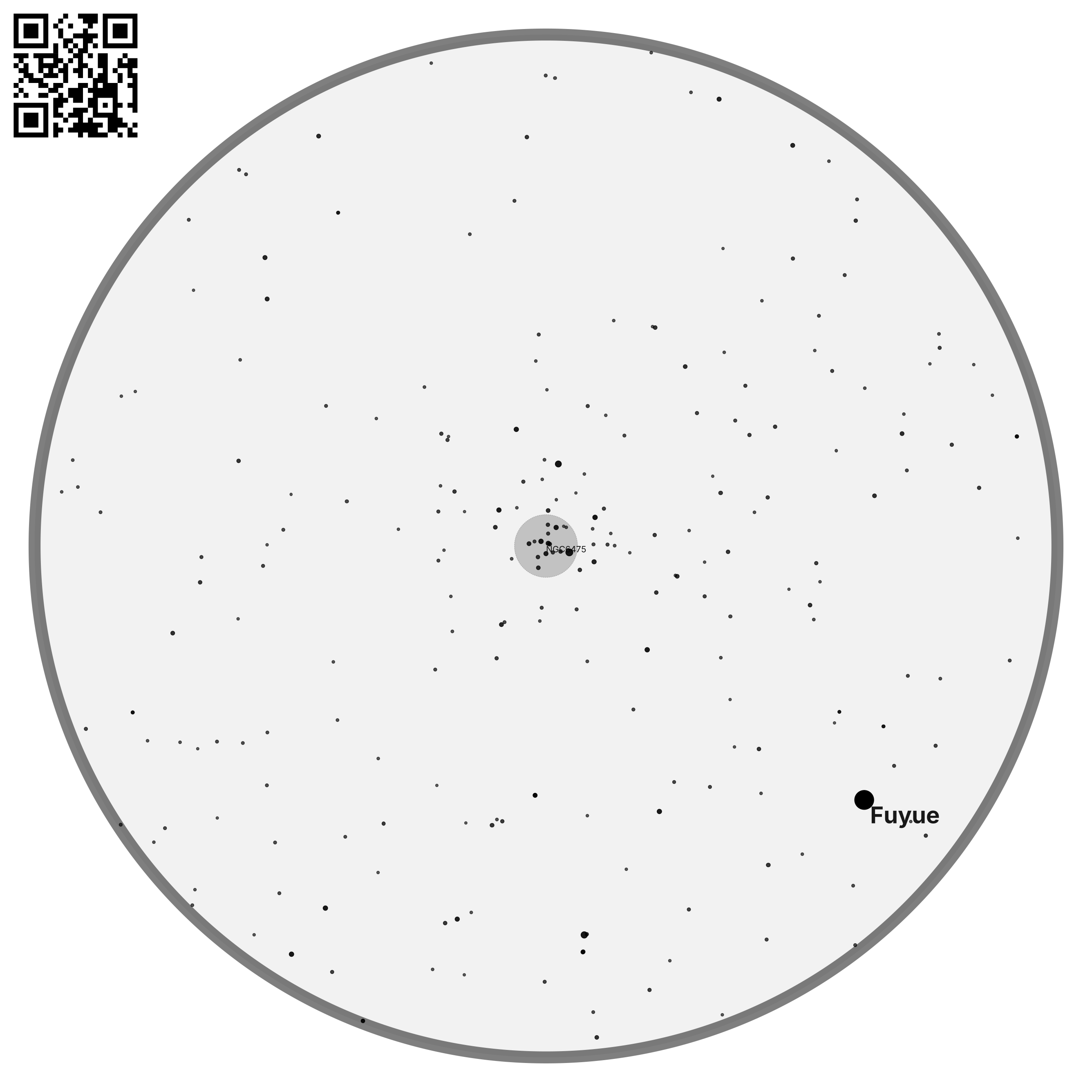
Finder scope & binocular view of Messier 7
| Property | Value |
|---|---|
| Common names | Ptolemy’s Cluster, Scorpius Cluster |
| Catalog names | M 7, NGC 6475, Cr 354, Mel 183, vdB-Ha 254 |
| Type | Stellar Cluster |
| Subtype | Open Cluster |
| Coordinates | 17h 53m 44.10s, -34° 49’ 36.00” |
| Season | May - July |
| Best month | Mid-June |
| Beginner friendly | Yes |
| Visual reward | High |
| Filters required | None |
| LP tolerance | High |
| Minimum equipment | Naked eye |
| Optimal equipment | Binoculars |
| Magnitude | 3.3 |
| Size | 75.0 arcminutes x 75.0 arcminutes |
| Constellation | Scorpius |
Observation Notes
Naked Eye
Easily visible from dark skies as a prominent, loose grouping of stars just off the “stinger” of Scorpius. In good conditions it appears clearly non-stellar, while from light-polluted locations it may fade to a hazy patch or disappear entirely.
Binoculars
The ideal instrument for viewing the cluster. Binoculars resolve it into a rich swarm of bright stars filling a wide field, with attractive patterns and groupings immediately apparent.
Small Telescope
At low power, provides a spectacular view of dozens of stars set against a rich Milky Way background. Higher magnifications often fail to frame the entire cluster at once.
Medium Telescope
Best suited for examining individual stars and subtle color differences, with several blue-white stars contrasted by a few warmer yellow or orange members. The cluster’s overall structure is best appreciated at low magnification.
Large Telescope
Not well suited for viewing the cluster as a whole due to its large angular size. Can be used to study individual stars, close pairs, or faint members, but wide-field instruments provide the most pleasing views.