NGC 1960
4-8 inch Telescope • Open Clusters Rich
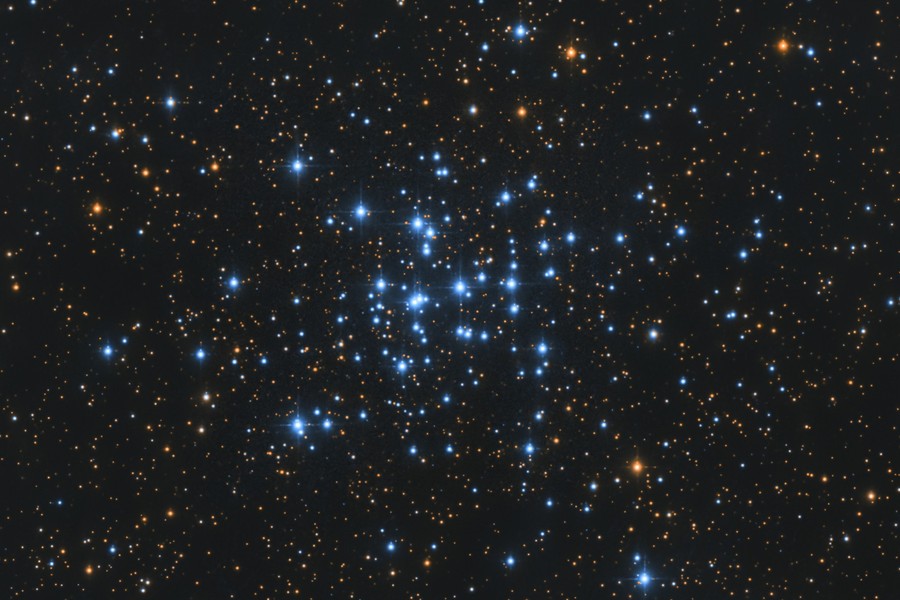
Image: Chuck Ayoub
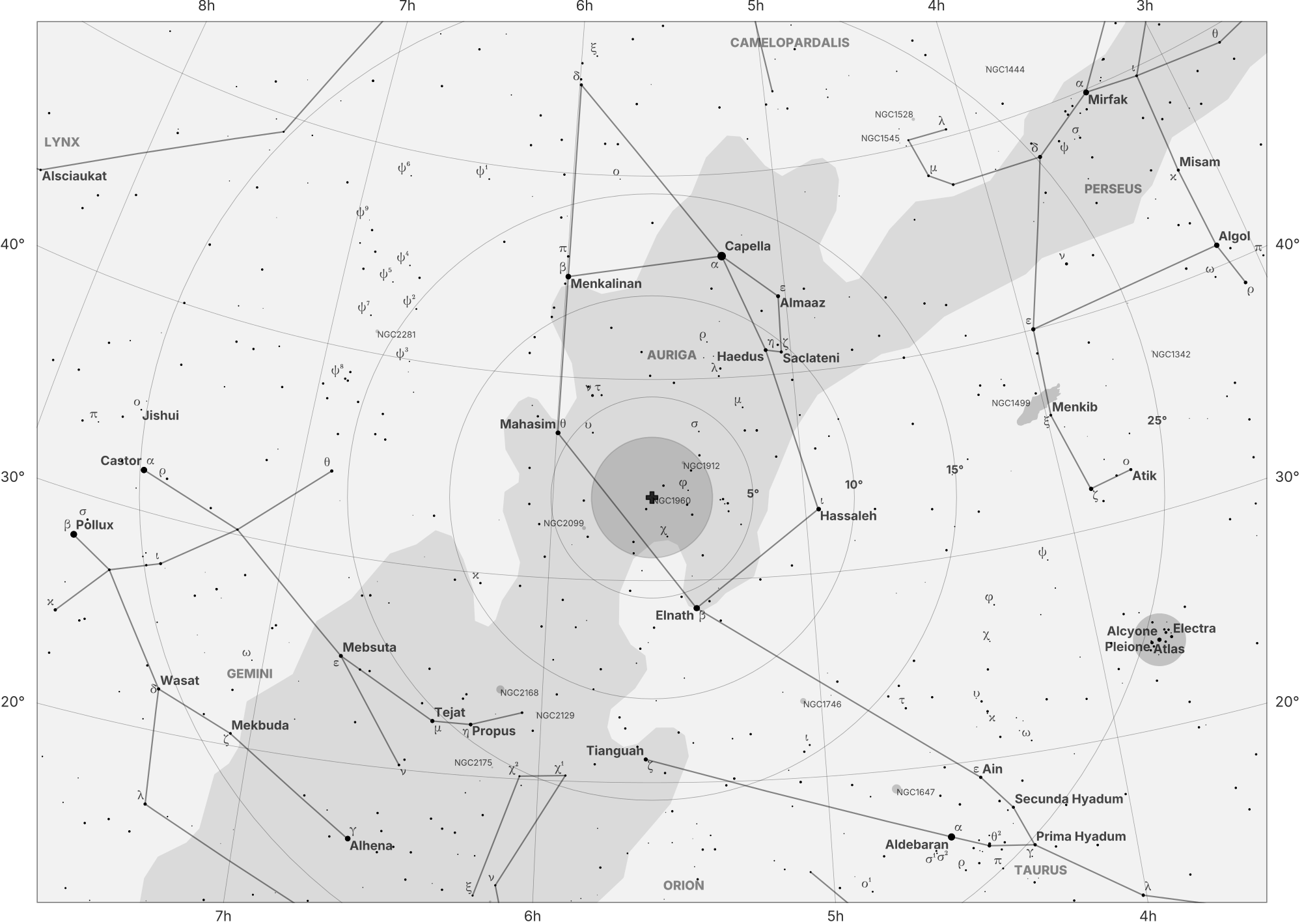
Finder map for NGC 1960
One of the three prominent Messier open clusters in Auriga—along with M37 and M38—M36 forms part of a classic trio that is a cornerstone of winter observing for amateur astronomers. Best observed when high in the sky to reduce atmospheric extinction and improve contrast, which is readily achieved for most Northern Hemisphere observers during winter. The challenge lies in resolving the densest central region cleanly, as the cluster’s brightest stars are concentrated toward the center, while fainter members spread into the surrounding field.
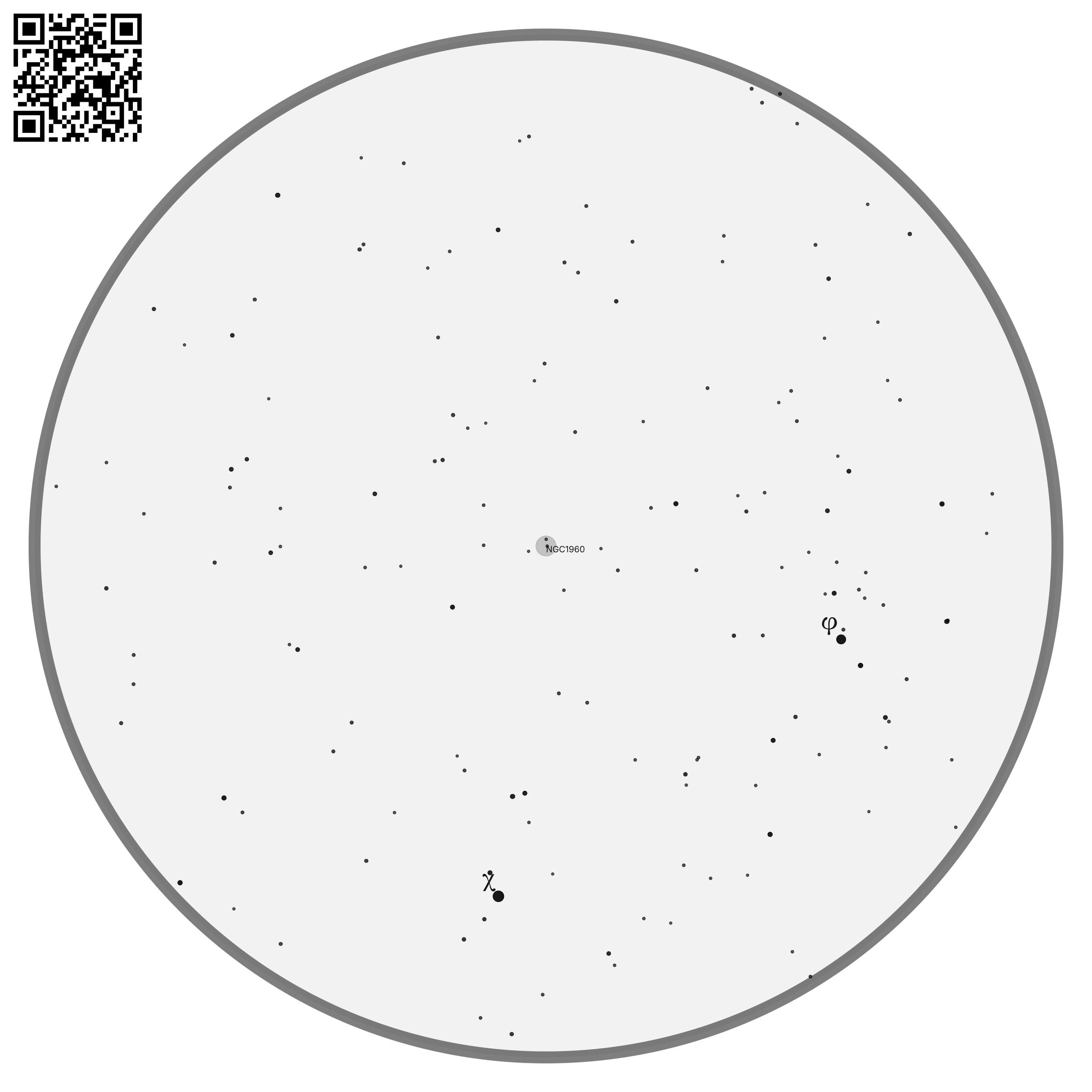
Finder scope & binocular view of NGC 1960
| Property | Value |
|---|---|
| Common names | Messier 36, M36 |
| Catalog names | M 36, NGC 1960, Cr 71, Mel 37 |
| Type | Stellar Cluster |
| Subtype | Open Cluster |
| Coordinates | 5h 36m 19.80s, +34° 08’ 02.00” |
| Season | November - January |
| Best month | Mid-December |
| Beginner friendly | Yes |
| Visual reward | Moderate |
| Filters required | None |
| LP tolerance | High |
| Minimum equipment | Binoculars |
| Optimal equipment | Small telescope |
| Magnitude | 6.0 |
| Size | 10.0 arcminutes x 10.0 arcminutes |
| Constellation | Auriga |
Observation Notes
Naked Eye
Not visible.
Binoculars
Easily visible as a distinct, compact cluster in 7×50 or 10×50 binoculars, appearing as a bright, granular patch with a few of the brightest stars beginning to stand out as pinpoints against the background.
Small Telescope
In 4–6 inch apertures, resolves into several dozen bright stars arranged in a loose but recognizable pattern, often described as a starfish or pinwheel formed by the brightest members. The cluster is clearly detached from the surrounding field.
Medium Telescope
With 8–12 inches, many stars are resolved across the cluster, and a mild central concentration becomes apparent. The blue-white color of the hotter stars may be noticed under good conditions.
Large Telescope
In apertures of roughly 14 inches and larger, the cluster is completely resolved, filling the field with a rich spray of stars that stand out cleanly against the Milky Way background, emphasizing its open, moderately concentrated structure.